Top 10 Construction Hoist Solutions for Your Next Project?
In the ever-evolving construction industry, choosing the right construction hoist is crucial for project success. With numerous options available, it's essential to rely on expert guidance. John Smith, a leading authority in construction equipment, once said, "A dependable construction hoist can make or break a project." His insights highlight the importance of selecting the right tools.
Construction hoists not only improve efficiency but also enhance safety on job sites. A reliable hoist streamlines material transport and reduces risks. However, each project has unique requirements. This makes it vital to evaluate different hoist solutions based on factors like load capacity, speed, and mobility.
Many professionals encounter challenges when evaluating these options. Some hoists may promise high performance but could lack durability. Failing to consider maintenance needs can lead to issues down the line. As you explore the top solutions, remember the significance of thorough research and expert advice. A well-chosen construction hoist is a cornerstone of a successful venture.
Understanding Construction Hoists: Types and Applications
When considering construction hoists for your next project, it's essential to understand the types and their applications. Construction hoists are critical for enhancing efficiency on job sites. They transport materials and personnel vertically. The two main types are freight hoists and personnel hoists, each serving distinct purposes.
Freight hoists are designed for heavy lifting. They accommodate large loads and are ideal for transporting materials across various building levels. According to a recent industry report, freight hoists can reduce labor costs by 20% due to increased speed and efficiency.
On the other hand, personnel hoists focus on safety. They allow workers to access high-rise areas quickly and securely. A study showed that using personnel hoists can lower work-related accidents by nearly 30%.
Project managers often face challenges in selecting the right hoist. Factors such as load capacity, height requirements, and site conditions play pivotal roles. The wrong choice can lead to project delays and inflated costs. Clients should weigh all options carefully. In many instances, the selection process lacks thoroughness, leading to regrets later. A meticulous approach ensures that the chosen hoist aligns with the project’s specific needs.
Key Factors to Consider When Selecting a Construction Hoist
When selecting a construction hoist for your project, consider key factors such as load capacity, height, and installation ease. Load capacity determines how heavy materials can be lifted. Match the hoist’s capabilities to your specific requirements to avoid overloading, which can lead to safety risks.
Another critical element is installation. A well-designed hoist should be quick to install and easy to operate. Look for features like automated controls and safety mechanisms that simplify the process. These improvements can save time and reduce the likelihood of human error, enhancing overall project efficiency.
**Tip:** Always conduct a site assessment before purchase to understand spatial constraints and project needs. Tailor your choice based on the unique demands of your environment.
**Tip:** Regular maintenance is crucial. It extends the life of your hoist and ensures safety. Create a maintenance schedule that considers the intensity of use.
**Tip:** Don't overlook user training. Even the best hoist can pose risks if operators are not adequately trained. Invest in comprehensive training programs to ensure safe operation.
Top 10 Construction Hoist Solutions for Your Next Project
This chart showcases the performance ratings of various construction hoist solutions based on key factors such as lifting capacity, speed, safety features, and ease of installation. These factors are critical when selecting the right hoist for your project.
Top 10 Construction Hoist Solutions for Efficiency and Safety
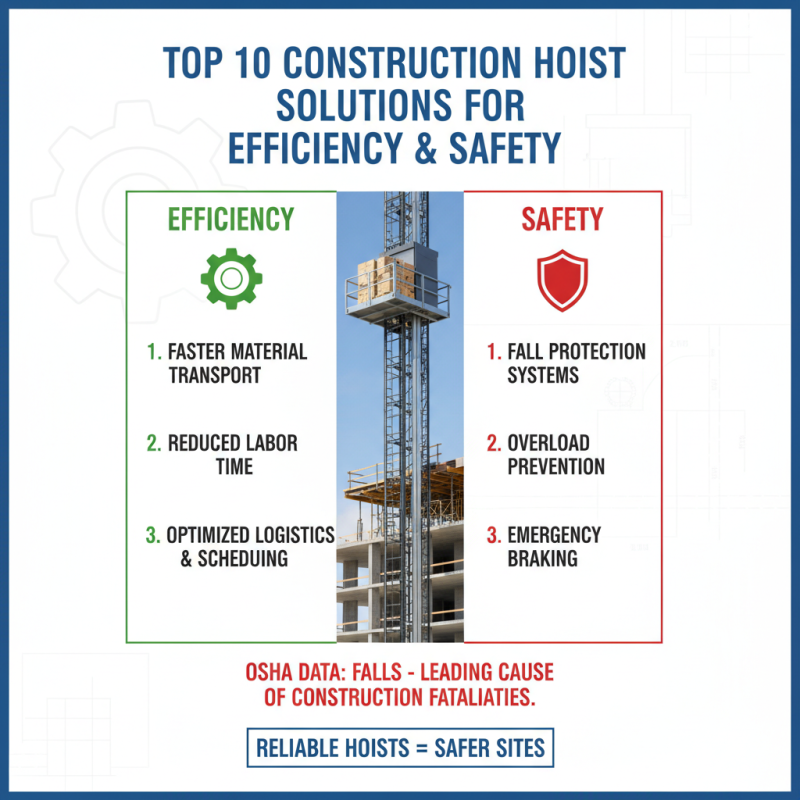
When selecting construction hoists, efficiency and safety are paramount. Data from the Occupational Safety and Health Administration (OSHA) indicates that falls remain a leading cause of construction fatalities. A reliable hoist system mitigates these risks through effective material handling and worker safety features.
Innovative hoist solutions now include advanced safety mechanisms, such as automatic braking systems and overload sensors. These features ensure that loads remain secure, significantly reducing accidents on-site. The market has seen a 30% increase in the adoption of such technologies, illustrating a shift towards prioritizing safety alongside operational efficiency.
However, not all hoist systems are created equally. Some may fall short in maintaining load security, leading to potential hazards. Proper training and frequent inspections are crucial. Federal guidelines recommend regular evaluations to ensure equipment is up to standard. The balance between efficiency and safety requires constant vigilance and a willingness to reassess current practices, as complacency can lead to mistakes.
Comparative Analysis of Popular Construction Hoist Brands
When evaluating construction hoist solutions, several brands stand out. Each offers unique features that cater to different project needs. Performance, safety, and ease of use are critical factors in making your choice. This comparative analysis highlights these aspects to guide your decision.
Many brands showcase advanced technology. Look for hoists with efficient load capacities. Ensure that safety features are compliant with industry standards. Some models integrate smart technologies for real-time monitoring. This can enhance safety but might complicate user training. It's vital to assess the learning curve for your team. Some options may require more extensive training than others.
**Tip:** Always check the service history of the hoist. Regular maintenance can reveal underlying issues. This can save you from unexpected downtime.
Cost can vary significantly across brands. A higher price tag doesn't always guarantee better quality. Consider long-term usage and potential repairs. Sometimes, what appears as an affordable choice may lead to extra expenses down the line.
**Tip:** Request demonstrations before making a decision. Seeing the hoist in action may provide insights not found in brochures. You might discover limitations that are not apparent otherwise.
Top 10 Construction Hoist Solutions for Your Next Project
| Hoist Type |
Max Capacity (kg) |
Lift Height (m) |
Speed (m/min) |
Power Source |
Key Features |
| Construction Hoist A |
2000 |
150 |
30 |
Electric |
Advanced safety features, compact design |
| Construction Hoist B |
1500 |
120 |
25 |
Diesel |
Rugged build for outdoor use, high maneuverability |
| Construction Hoist C |
1800 |
100 |
20 |
Electric |
Quick deployment, versatile configurations |
| Construction Hoist D |
2500 |
160 |
35 |
Electric |
Heavy-duty capacity, efficient power consumption |
| Construction Hoist E |
2000 |
140 |
28 |
Hydraulic |
Smooth operation, low noise |
| Construction Hoist F |
2200 |
110 |
22 |
Diesel |
Versatile usage, efficient fuel consumption |
| Construction Hoist G |
1700 |
130 |
24 |
Electric |
Compact, user-friendly controls |
| Construction Hoist H |
2100 |
150 |
29 |
Electric |
Cost-effective, high performance |
| Construction Hoist I |
1900 |
120 |
27 |
Diesel |
Robust design, ideal for tough environments |
| Construction Hoist J |
1600 |
140 |
20 |
Electric |
Lightweight, easy to transport |
Maintenance Best Practices for Construction Hoists in Projects
Maintenance is crucial for ensuring the safety and efficiency of construction hoists.
Regular inspections should be a priority. Check for wear and tear on cables, brakes, and control mechanisms.
Small issues can lead to significant failures if left unattended.
Schedule these inspections frequently, ideally before major lifts.
Lubrication is another important aspect. Moving parts need to be well-lubricated to avoid friction and potential damage.
Use the right type of lubricant as specified by equipment guidelines. Regularly replace old lubricants to ensure optimal performance.
Ignoring this process may result in unexpected malfunctions.
Finally, training staff on operational best practices is essential. Proper use of construction hoists reduces wear and increases safety.
Encourage teams to follow the recommended load limits strictly. Overloading the hoist may cause it to malfunction, leading to accidents.
A culture of safety ensures that the equipment functions correctly and prolongs its service life.
Regularly revising training materials keeps everyone informed about the latest best practices.








 Ms.Lily International Sales Director
 Join 3S Group