Choosing among China’s top Grain Silo Lift manufacturers requires more than comparing catalog prices. Buyers should examine lifting capacity, discharge speed, steel thickness, drive components, and the design of the buckets and belt. A lift that looks solid in a brochure may behave differently when handling dusty grain through a tall, narrow elevator leg. Ask for drawings, material specifications, test records, and references from installations with similar throughput. Details matter.
Grain quality matters, too. Iowa State grain-quality expert Charles Hurburgh has emphasized careful handling as part of protecting grain quality. A practical paraphrase of that principle is: “Protect grain quality at every handling step.” This is a summary, not a verified verbatim quotation. It points buyers toward equipment that moves grain steadily, limits spillage, and can be inspected and maintained safely. Ask manufacturers how their systems handle abrasion, alignment, dust control, and routine servicing. Request evidence, not just assurances.
This guide introduces ten manufacturers for global buyers, with attention to product range, customization, export support, and after-sales service. Compare like with like. Capacity figures can depend on grain type, moisture, and operating conditions, so published numbers need context. A missed detail can become a costly bottleneck. No shortlist replaces factory checks or technical review; even a polished supplier profile leaves questions unanswered. That is worth remembering.
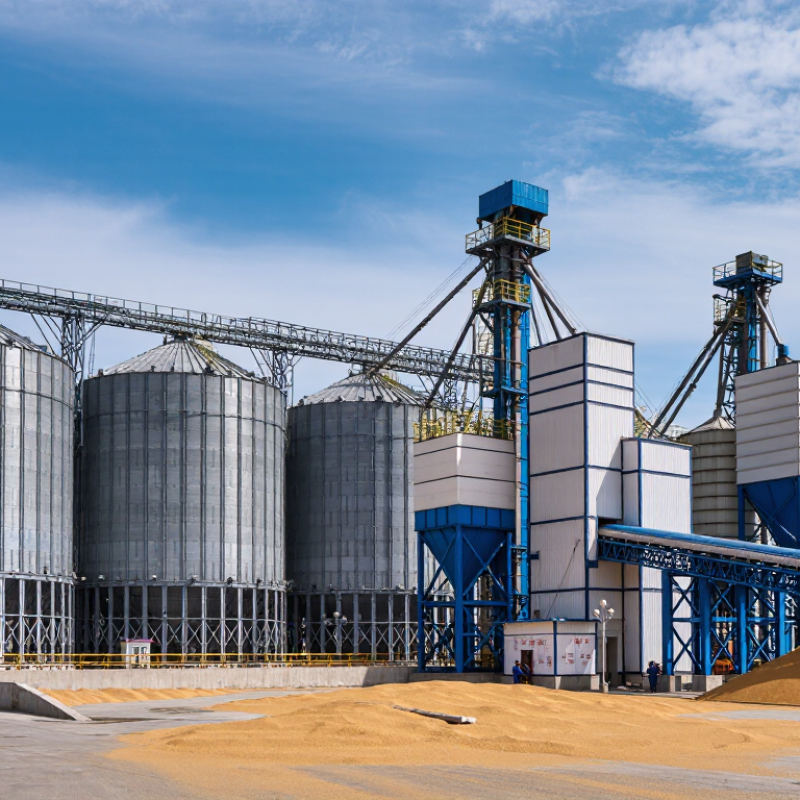
Grain silo lifts move harvested grain vertically between receiving pits, cleaning lines, dryers, and storage bins. Bucket elevators are common: buckets attached to a belt or chain lift grain inside an enclosed casing. Belt-driven units often suit gentler handling, while chain-driven designs can serve demanding, high-throughput installations. Inclined conveyors and skip lifts may fit smaller facilities or awkward layouts. Their job sounds simple. But poor alignment, overloading, or worn buckets can cause spillage, dust, and uneven flow.
Applications range from farm silos to commercial terminals and feed mills. Capacity, lift height, grain type, moisture, and required throughput should guide equipment selection. The FAO’s 2023 food-security report estimates that 13.2% of food was lost between harvest and retail in 2021; this figure covers food generally, not grain alone. It highlights why careful handling and storage matter. Lifts can support smoother transfers, but they cannot prevent every loss. That distinction is easy to overlook.
Tips: Match elevator capacity to the entire conveying line, not just the silo inlet. Check access for inspection, belt tensioning, and bucket replacement. Ask suppliers for grain-specific throughput assumptions; published figures may rely on ideal conditions. A little doubt helps.
China’s grain silo lift manufacturing industry serves farms, storage operators, and grain-handling projects that need reliable vertical movement of grain. Common products include bucket elevators, drive units, casings, and discharge components. Details matter. Before comparing quotations, buyers should confirm rated capacity, lifting height, grain type, moisture conditions, and expected operating hours. A poorly matched elevator can cause spillage, grain damage, or repeated stoppages.
Manufacturing quality depends on more than fabrication. Steel thickness, weld consistency, corrosion protection, bucket spacing, and inspection access all affect service life. Ask for dimensional drawings, motor and reducer specifications, wear-part details, and records of factory checks. Requesting test documentation is sensible. Export projects also require attention to packaging, installation interfaces, and clear operating manuals. Confirm whether spare parts and technical guidance will remain available after delivery.
Suppliers vary in their engineering and quality-control capabilities. A polished brochure proves little. Video inspections, reference installations, and reviews of production procedures can offer a clearer picture. Compare expected operating needs, not just purchase prices. Site conditions are often described too simply. Dust, seasonal humidity, and uneven grain flow can affect performance, so specifications should reflect the actual facility.
When comparing grain silo lift manufacturers, start with the job, not the catalog. Define the grain type, hourly throughput, lift height, inlet conditions, and operating hours. A bucket elevator handling dry wheat may not suit sticky or higher-moisture material. Small differences matter. Ask how the proposed design controls belt tracking, bucket spacing, and spillage at the boot.
Request drawings and operating data for the exact configuration. Check casing thickness, access-door locations, bearing arrangements, and methods for monitoring belt misalignment or bearing temperature. Ask which guards, emergency stops, and dust-control connections are included. Details count. A supplier should explain its assumptions, not only quote a maximum capacity. If possible, review a reference installation with similar grain and operating demands; a site visit can reveal maintenance access that drawings miss.
Compare fabrication quality, corrosion protection, lead times, commissioning support, and availability of wear parts. Request inspection records, warranty terms, and a clear list of exclusions. Independent test data helps, but operating references and service response matter too. Ask the supplier to describe a realistic start-up sequence and likely failure points. I would still leave room for uncertainty: grain condition, installation alignment, and operator habits can change results, even with a sound design.
Use these ten criteria to compare suppliers consistently. The table is an evaluation framework, not a verified ranking of individual manufacturers.
| No. | Evaluation Dimension | What to Compare | Evidence to Request |
|---|---|---|---|
| 1 | Rated Capacity | Compare the stated conveying capacity and confirm the material, bulk density, moisture condition, and operating assumptions used for the rating. | A written capacity calculation or technical datasheet showing the rating basis. Do not compare figures that use different materials or operating conditions. |
| 2 | Lift Height and Layout | Check whether the proposed elevator height, inlet and discharge positions, and headroom fit the site’s silo and conveyor arrangement. | General arrangement drawings with overall dimensions, service clearances, connection locations, and the specified conveying route. |
| 3 | Elevator Design | Review the proposed belt or chain drive, bucket configuration, casing design, and suitability for the grain and duty cycle. | Equipment drawings and a description of the main components, operating speed, drive arrangement, and intended application. |
| 4 | Grain Handling Quality | Assess how the inlet, buckets, discharge, and operating speed are designed to limit spillage, blockages, and unnecessary grain damage. | Relevant operating references, design details for loading and discharge, and any available test or commissioning records for comparable grain-handling duties. |
| 5 | Materials and Corrosion Protection | Compare casing and structural materials, surface treatment, fasteners, and protection suited to the installation environment. | Material specifications and coating details. For outdoor or corrosive environments, request the specified protection system and maintenance requirements. |
| 6 | Safety Provisions | Check for applicable guarding, access provisions, emergency stops, speed or alignment monitoring, and protection against unsafe operation. | A safety-device list, electrical and control schematics, risk documentation, and confirmation of applicable requirements for the destination market. |
| 7 | Dust and Explosion Risk | Determine how the design addresses combustible grain dust and whether the complete installation requires dust-control or explosion-protection measures. | A project-specific dust-hazard assessment and details of proposed protection and dust-control measures. Requirements depend on the site, material, and local regulations. |
| 8 | Controls and Integration | Confirm compatibility with upstream and downstream conveyors, silo controls, interlocks, power supply, and the site’s preferred control system. | Control philosophy, interface list, motor and electrical data, and a clear statement of what is included or excluded from the supply scope. |
| 9 | Quality and Documentation | Evaluate production inspection, traceability, testing, installation instructions, and the completeness of handover documentation. | Inspection and test plan, applicable quality-system documentation, operating and maintenance manuals, drawings, and commissioning checklist. |
| 10 | Delivery and After-Sales Support | Compare the confirmed delivery schedule, spare-parts availability, warranty terms, commissioning support, and response arrangements. | A project schedule, written warranty conditions, recommended spare-parts list, service scope, and named support arrangements for the destination country. |
Profiles of ten Chinese grain silo lift manufacturers reveal a market shaped by different engineering strengths. Some focus on bucket elevators for moving grain vertically, while others offer complete conveying systems with belt or chain equipment. Several emphasize enclosed transfer points, which can help limit dust around loading areas. Their profiles are most useful when they describe capacity, lift height, grain type, and operating conditions clearly.
Look beyond product photos. A practical profile should explain steel thickness, bucket material, drive configuration, inspection access, and available safety devices. Ask whether the stated capacity applies to your grain and moisture conditions; figures can vary with both. Details matter. Installation guidance and spare-parts support also deserve attention, especially for remote sites. A polished catalogue alone proves little.
The remaining profiles may stand out through custom fabrication, retrofit experience, export packing, or system integration. Compare drawings and technical data, not just headline capacity. Request reference projects with similar silo layouts, and check how maintenance tasks are handled. No supplier profile is perfect. Some leave gaps in service information, and that deserves a closer look before selection.
For global buyers comparing grain silo lifts, a matching capacity figure is only a starting point. Ask suppliers to state throughput for a specific grain, moisture level, and lift height. Wheat and maize do not always flow alike. A rated figure without test conditions can hide bottlenecks at the inlet or discharge. Fit matters. Compare bucket size and spacing, belt material, drive power, and the proposed head and boot design. Request a layout drawing that shows the lift’s connection to conveyors and silo openings. A few centimeters can affect installation.
Check construction details against the site: dust exposure, humidity, temperature, and expected operating hours. Ask for material specifications, guards, access doors, overload protection, and a maintenance schedule. Request clear lead times, spare-parts lists, commissioning scope, and written warranty terms. If possible, review reference installations handling similar crops and volumes. Photos help, but operating data and service records are stronger evidence. Keep the questions consistent across all ten candidates.
The comparison is rarely tidy. One supplier may offer higher output, while another provides easier belt access or clearer documentation. These trade-offs deserve attention. Verify electrical requirements and control interfaces before ordering, especially when equipment will connect to existing systems. Ask who supports installation and troubleshooting in the destination region. A low purchase price can become costly if parts take weeks to arrive. Still, specifications do not predict every site condition; allow room for a practical inspection before final approval.
A practical framework for comparing suppliers when sourcing grain silo lifts for global projects.
The percentages are suggested buyer-defined evaluation weights, not market-survey results or manufacturer rankings. Adjust them to suit your project’s capacity, grain type, site conditions, and local requirements.