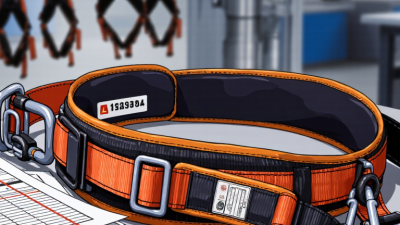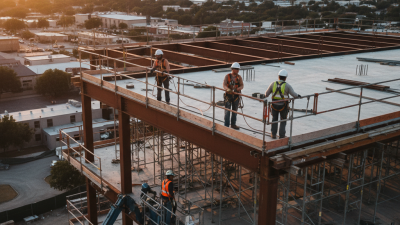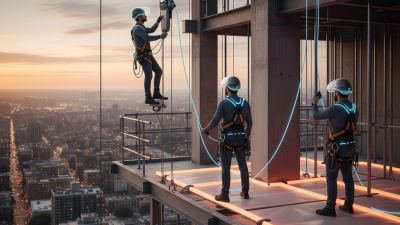
China’s aerial work equipment market is expanding, but supplier quality varies sharply. Choosing reliable Aerial Work Fall Protection manufacturers requires more than comparing prices or catalog photographs. Buyers should examine product design, testing records, traceability, worker training, and after-sales support.
Dr. John Howard, Director of the National Institute for Occupational Safety and Health, states, “Falls from elevation are among the most common causes of serious work-related injuries and deaths.” This warning gives the topic practical urgency. A harness, lanyard, self-retracting lifeline, or anchor system must perform under real working conditions. Dusty construction sites, narrow platforms, sharp edges, and sudden movement expose weak designs quickly.
This guide reviews China’s top Aerial Work Fall Protection suppliers through an evidence-based lens. It considers manufacturing experience, material control, inspection procedures, relevant certifications, and application knowledge. It also looks at communication, customization, delivery consistency, and support after installation.
No supplier is perfect.
A polished website proves little. Buyers should request test reports, batch records, user instructions, and clear certification details. They should also confirm whether certificates match the exact model being purchased. That small detail is often overlooked.
Field experience matters. A supplier serving tower maintenance teams may understand risks differently from one serving warehouse operators. The strongest companies explain limitations honestly. They do not promise that equipment alone can prevent every fall.
Some comparisons remain difficult. Public data may be incomplete, and supplier claims require verification. Therefore, this overview is a practical starting point, not a final purchasing decision. Site-specific risk assessments and qualified professional review remain essential before deployment.
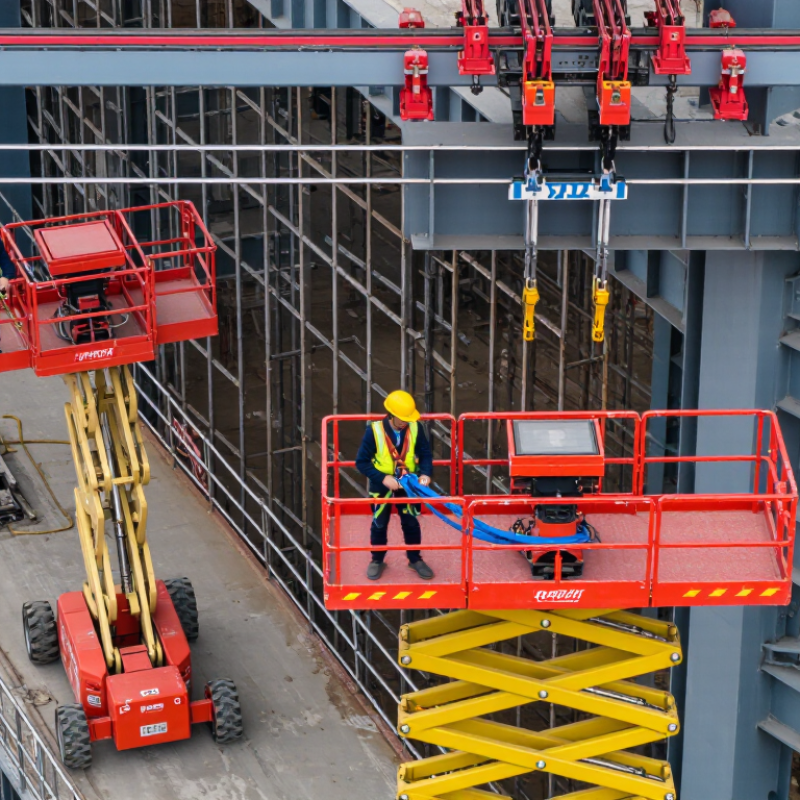
China’s leading aerial work fall protection suppliers combine practical manufacturing experience with disciplined safety testing. They produce full-body harnesses, energy-absorbing lanyards, lifelines, rescue equipment, and anchorage systems for towers, roofs, platforms, and maintenance work. Strong suppliers explain how each component performs under load, heat, abrasion, and repeated use. They also provide test records, material details, inspection procedures, and clear user instructions.
Factory capability matters. Look for controlled stitching, consistent webbing strength, corrosion-resistant hardware, and traceable production batches. A reliable supplier should support sample testing before large orders. On a real worksite, small details matter: leg straps must stay flat, buckles should close smoothly, and labels must remain readable after dust and rain. Supplier engineers should understand harness adjustment, fall clearance, suspension risks, and rescue planning. Training support is valuable, especially for teams working at changing heights.
Price alone can mislead. A cheaper harness may use weaker webbing or offer poor after-sales support. No supplier is perfect. Even experienced factories can overlook packaging damage or inconsistent sizing. Buyers should inspect random samples and review corrective actions, rather than trusting polished catalogs. Communication also reveals professionalism. Fast replies help, but accurate answers matter more. China’s strongest suppliers build credibility through documented quality control, responsive technical service, and products tested for real working conditions.
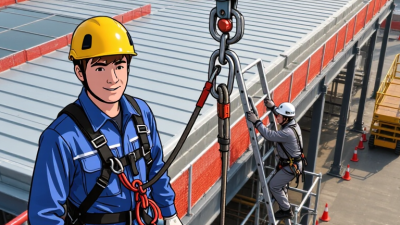
China’s leading aerial work fall protection suppliers typically provide complete systems, not single products. Their core range includes full-body harnesses, shock-absorbing lanyards, self-retracting lifelines, rope grabs, anchorage points, and horizontal lifelines. Many factories also offer rescue kits, storage bags, inspection tags, and user training. These details matter when workers move between steel frames, roofs, towers, and elevated platforms.
Market research reports indicate steady global demand. Grand View Research estimated the global fall protection equipment market at about USD 3.2 billion in 2023, with continued growth expected through 2030. The International Labour Organization identifies falls from height as a serious workplace risk, especially in construction and maintenance. Strong Chinese suppliers respond with products tested against recognized standards, including static-strength checks, energy-absorption tests, corrosion evaluation, and traceable batch records. A reliable supplier should explain test methods clearly, rather than only displaying certificates.
Field experience reveals a common weakness: equipment is often purchased correctly but used poorly. A harness can look durable while fitting incorrectly around the chest or thighs. Suppliers with stronger technical support provide fitting demonstrations, pre-use checklists, periodic inspection guidance, and rescue planning. However, catalog claims are not enough. Buyers should review material specifications, webbing width, connector locking performance, fall-clearance calculations, and replacement policies. Even experienced teams may overlook suspension trauma or sharp-edge exposure. That oversight deserves more attention.
Reliable aerial work suppliers in China should be judged by standards, testing, and traceability. China’s GB 6095-2021 standard covers full-body safety harnesses. It addresses structure, strength, marking, and inspection requirements. International buyers may also require EN 361 EN 358 EN 355 or ANSI/ASSP Z359.11 compliance. These standards define harness design, work positioning, energy absorption, and performance testing. Certification must come from an accredited laboratory, not only from a factory statement.
OSHA identifies falls as a leading cause of fatal injuries in construction. Its 2022 data recorded 395 construction deaths from falls, slips, trips, and related incidents. This figure shows why supplier evaluation cannot stop at product appearance. Ask for batch test reports, material specifications, serial-number tracking, and inspection records. ISO 9001 certification can support quality control, but it does not replace product-specific testing. A certificate alone can still leave a gap.
Tips: Check the certificate number with the issuing body. Review webbing stitching under bright light. Reject unclear labels or missing manufacturing dates. Confirm compatibility between harnesses, lanyards, lifelines, and anchor points. Field experience also matters. A well-made harness can fail through incorrect fitting, poor storage, or late replacement. I would not treat every supplier document as final proof; independent verification remains the safer choice.
What Are China Top Aerial Work Fall Protection Suppliers?
How to Evaluate China’s Top Fall Protection Suppliers
Evaluating a Chinese fall protection supplier requires more than comparing prices. Start with product evidence, factory capability, and field experience. Ask for technical drawings, material specifications, inspection records, and certificates required in your destination market. A serious supplier should explain anchor strength, harness adjustment, energy absorption, and service-life limits in clear language.
Look closely at manufacturing controls. Request a factory video call or an independent audit when possible. Check whether incoming materials are traceable and whether finished products receive documented inspections. Samples should be tested for stitching quality, buckle function, webbing damage, and labeling accuracy. Do not rely on photographs alone. They can hide uncomfortable details.
Field support matters too. Ask how the supplier handles replacement parts, user training, complaints, and urgent technical questions. I have found that response speed often reveals more than a polished catalog. Small warning signs matter. Vague answers deserve follow-up. A low quotation may exclude testing, packaging, or after-sales service. That is easy to miss. Review contract terms, delivery records, and quality responsibilities before placing a larger order. Independent laboratory verification can add confidence, especially when equipment will be used on changing worksites. No supplier is flawless, and even a capable factory may need closer supervision during rapid production growth.
| Evaluation Dimension | Suggested Weight | What to Verify | Acceptable Evidence or Benchmark | Scoring Guidance |
|---|---|---|---|---|
| Regulatory and Product Compliance | 25% | Confirm that the supplied harnesses, lanyards, lifelines, connectors, and anchorage components comply with the regulations required in the target market. | Applicable documentation may include GB 6095-2021 for personal fall protection systems in China, EN 361 for full-body harnesses, EN 355 for energy-absorbing lanyards, EN 362 for connectors, ANSI/ASSP Z359 requirements, or OSHA 1910.140 where applicable. | 5 = Complete, current, product-specific evidence 3 = Partial evidence 1 = Unsupported claims |
| Independent Testing and Traceability | 15% | Assess whether test reports identify the exact model, materials, test method, sample quantity, test date, and issuing laboratory. | Prefer reports issued by competent independent laboratories. ISO/IEC 17025 accreditation of the testing laboratory strengthens the credibility of test results. Product labels should connect the item to a batch or serial number. | 5 = Independent, traceable reports 3 = Internal or incomplete reports 1 = No verifiable reports |
| Quality Management System | 12% | Review incoming-material inspection, in-process controls, final inspection, nonconformity handling, corrective actions, and document control. | An ISO 9001 certificate can support the assessment, but it should be checked for scope, validity, certification body, and manufacturing site. A quality manual alone is not equivalent to third-party certification. | 5 = Certified and consistently implemented 3 = Basic documented controls 1 = Weak or undocumented controls |
| Material and Component Reliability | 12% | Verify webbing, thread, buckles, D-rings, hooks, energy absorbers, corrosion resistance, and compatibility between components. | Request material specifications, supplier declarations, strength records, corrosion or environmental test results, and incoming inspection records. Critical load-bearing components should have controlled specifications and approved suppliers. | 5 = Controlled materials with supporting records 3 = Basic material information 1 = Unclear or unverifiable materials |
| Product Design and Ergonomics | 10% | Evaluate fit adjustment, weight distribution, attachment-point design, fall-arrest compatibility, ease of inspection, and suitability for prolonged aerial work. | Practical evaluation should include user fitting, movement tests, compatibility checks, labeling clarity, and inspection of stitching, buckles, connectors, and impact indicators. | 5 = Comfortable, intuitive, application-specific design 3 = Functional design with limitations 1 = Poor fit or unclear use |
| Manufacturing Capacity and Process Control | 8% | Determine whether the supplier can maintain consistent quality for prototype, small-batch, and recurring production orders. | Review production flow, equipment, operator training, stitching controls, calibration records, capacity planning, batch inspection, and contingency arrangements for key materials. | 5 = Stable process and documented capacity 3 = Adequate capacity with limited controls 1 = Heavy dependence on uncontrolled outsourcing |
| Inspection, Packaging, and Labeling | 6% | Check final inspection criteria, product markings, user instructions, packaging protection, shelf-life information, and storage requirements. | Labels should normally identify model, size, standard, manufacturer or responsible entity, production information, and applicable warnings. Instructions should cover fitting, inspection, use, cleaning, storage, and retirement. | 5 = Complete and consistent documentation 3 = Minor omissions 1 = Inadequate labeling or instructions |
| Customization and Technical Support | 5% | Assess the ability to support different body sizes, attachment configurations, work environments, private labeling requirements, and application-specific documentation. | Require controlled drawings, approved samples, change management, compatibility guidance, fitting instructions, and technical responses from qualified personnel rather than only sales representatives. | 5 = Strong engineering and application support 3 = Standard customization only 1 = Limited technical capability |
| Delivery Performance and Supply Continuity | 4% | Evaluate lead-time reliability, minimum order quantities, forecast management, export experience, and continuity of supply. | Use purchase-order records, documented production schedules, agreed inspection points, shipment history, and a written process for handling delays or material shortages. | 5 = Predictable delivery and contingency planning 3 = Acceptable but inconsistent delivery 1 = Frequent delays or unclear planning |
| After-Sales Service and Product Liability | 3% | Review warranty terms, complaint response, incident investigation, recall procedures, replacement policy, and retention of quality records. | A responsible supplier should provide a defined complaint channel, corrective-action process, product identification records, and written procedures for suspected product defects or safety incidents. | 5 = Formal and responsive system 3 = Basic support available 1 = No defined process |
| Total Evaluation Weight | 100% | Recommended approach: multiply each category score from 1 to 5 by its weight, then compare suppliers using verified evidence rather than promotional claims. | ||
China’s top aerial work fall protection suppliers support construction, maintenance, and industrial operations. Their product ranges often include full-body harnesses, energy-absorbing lanyards, self-retracting lifelines, anchor systems, and rescue equipment. The need is substantial. The International Labour Organization estimated 2.93 million work-related deaths worldwide in 2023. Construction remains especially exposed to falls from roofs, scaffolds, towers, and unfinished floors. In the United States, OSHA recorded 395 fatal construction falls in 2022, representing a major share of construction deaths. These figures show why supplier capability matters beyond catalogue pricing.
Tips: Check independent test reports, traceability, user instructions, and inspection guidance. For construction, prioritize adjustable systems that tolerate concrete dust and frequent relocation. Maintenance teams may need lightweight equipment for ladders, platforms, and narrow service areas. Industrial users should examine compatibility with steel structures, machinery, chemicals, and repeated cleaning. Ask for training support and rescue planning. A harness alone cannot prevent every incident.
Reliable suppliers should explain rated capacity, connector compatibility, fall clearance, and replacement intervals in clear technical language. They should also provide evidence of quality management and recognized conformity testing. ISO 45001 guidance stresses systematic risk control, not personal equipment alone. I would not treat a low price as proof of value. Field experience often reveals uncomfortable gaps, such as poor fit, tangled lines, or anchors placed too far from the work zone. Even strong equipment can fail when workers rush, supervisors overlook inspections, or rescue plans remain theoretical. Supplier selection should therefore include practical demonstrations, local support, and documented after-sales service.
Application benchmarks for construction, maintenance, and industrial work
The chart compares minimum static-strength benchmarks for personal fall-arrest anchorage points. OSHA requires 5,000 lb (22.2 kN) per employee, while EN 795:2012 specifies 12 kN for many single-user metallic anchor devices. These benchmarks help buyers assess equipment used on construction sites, during facility maintenance, and in industrial work-at-height operations.