What Is an Offshore Platform Lift and How Does It Work?
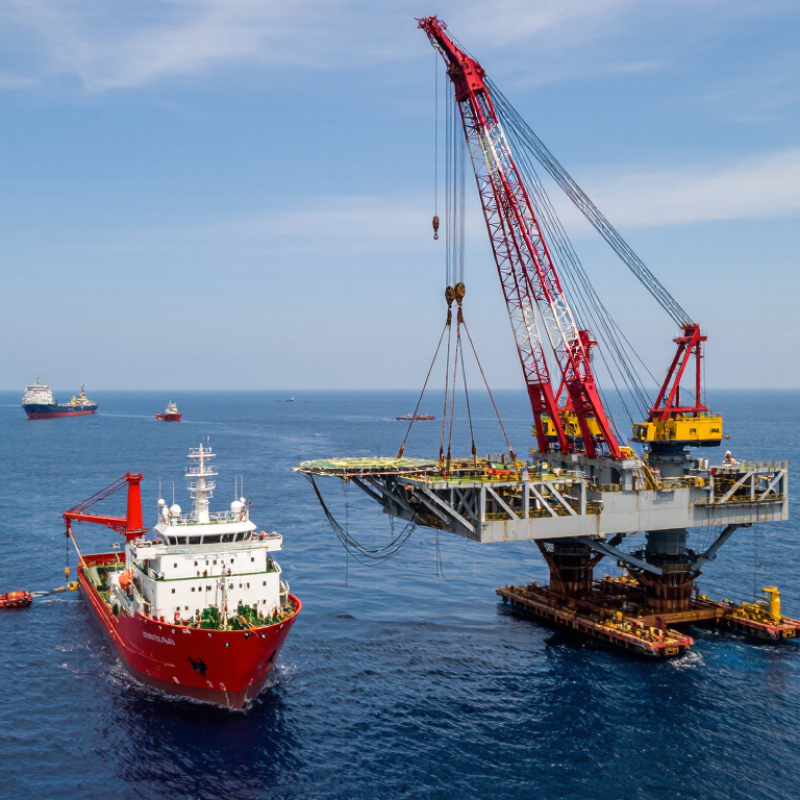
An Offshore Platforms Lift is a carefully engineered operation that moves an entire platform, module, or major structural section into position. It may involve heavy-lift vessels, strand jacks, hydraulic skidding systems, or floating cranes. The method depends on weight, sea conditions, water depth, platform design, and available lifting points.
Offshore lifting specialist Peter van den Berg captures the mindset clearly: “A lift is never routine when the environment is offshore.” The statement reflects a central engineering truth. Wind, waves, vessel motion, and changing loads can affect every stage. Even a small alignment error may create serious stress around connection points. Engineers therefore study load paths, center of gravity, sling angles, crane capacity, weather limits, and emergency controls before work begins.
This guide explains how Offshore Platforms Lift operations are planned and performed. It follows the journey from structural assessment and lift analysis to vessel positioning, controlled hoisting, installation, and final securing. Clear examples will show what happens when a jacket leaves its support frame, when a topside is raised above a deck, and when hydraulic equipment moves a platform by small increments.
Some details are easy to overlook. Salt spray can damage equipment. A delayed signal can disrupt coordination. Perfect calculations cannot remove uncertainty. That is why experienced crews use inspections, rehearsals, monitoring systems, and stop-work authority. The process is highly technical, but it also depends on disciplined judgment. This article examines both the proven methods and the practical weaknesses that still require careful reflection.
Offshore Platform Lifts Defined: Jackets, Topsides, Modules, and Lift Scopes
An offshore platform lift is a controlled marine operation for moving heavy structures onto a jacket or support frame.
The jacket is the steel substructure fixed to the seabed. It carries the topsides above the waterline. Topsides contain processing equipment, utilities, control rooms, and living areas.
Their weight can reach thousands of tonnes.
A lift scope defines exactly what the operation includes. It may cover transport, lifting, alignment, temporary supports, bolting, welding, and final inspection. Smaller modules, such as compressor packages or power units, often arrive separately. Each module needs verified lifting points, a known center of gravity, and suitable rigging. Small errors become serious offshore. A sling angle can change loading across the entire crane system.
Experienced teams study drawings, vessel motions, wind limits, sea conditions, and crane capacity before mobilization. They also check how the jacket may respond when a topside lands.
During installation, operators monitor load readings and guide ropes while the crane moves slowly. Radios must remain clear. Weather can change the plan within minutes.
Lift plans look precise, but they are not perfect. Equipment readings can drift, and actual movement may differ from calculations. That assumption deserves challenge. Engineers use independent checks, trial movements, and hold points to reduce uncertainty. A successful lift depends on disciplined preparation, practical offshore judgment, and clear responsibility across every lift scope.
Lift Planning Under API RP 2D: Load, Radius, WLL, and Dynamic Factors
What Is an Offshore Platform Lift and How Does It Work?
An offshore platform lift moves equipment between a vessel, deck, and elevated structure. The operation may involve a crane, slings, shackles, tag lines, and several trained workers. Under API RP 2D, planning begins with the load’s verified weight, center of gravity, lifting points, and intended travel path. A small error matters. A 12-ton load can exceed the crane’s allowable capacity when radius increases.
Radius is the horizontal distance from the crane’s rotation center to the load’s center. Crane capacity usually decreases as radius grows. Planners must compare the expected load moment with the crane load chart, not only the rated capacity. The working load limit, or WLL, applies to every component, including slings and shackles. The weakest certified component controls the lift.
Dynamic factors are equally important. Vessel motion, wind, wave action, sudden starts, and load swing can amplify static weight. API RP 2D requires suitable allowances for these effects and controlled operating conditions. The International Association of Oil & Gas Producers’ safety performance reports continue to identify lifting and dropped objects as recurring high-potential hazards. That evidence supports strict exclusion zones and clear communication. Experienced crews also check deck strength, weather limits, line angles, and equipment history before lifting. A neat calculation can still fail in practice. Human judgment remains imperfect.
Heavy-Lift Crane Operations: Up to 20,000-Tonne Capacity and Vessel Stability
What Is an Offshore Platform Lift and How Does It Work?
An offshore platform lift moves large structures from a transport vessel onto a fixed or floating installation. These structures may include topsides, living quarters, or processing modules. Heavy-lift cranes can handle loads of up to 20,000 tonnes, depending on crane configuration, lifting radius, and sea conditions. The operation begins with detailed engineering. Teams confirm the load’s weight, lifting points, center of gravity, and structural strength. Small errors matter.
Vessel stability controls the entire lift. Ballast tanks are adjusted to manage draft, trim, and heel as the load leaves the deck. Engineers monitor the vessel’s center of gravity throughout the transfer. Crane movements must remain synchronized, especially when two cranes share one load. Even a slow swing can create dangerous dynamic forces. The sea state must stay within approved limits. Wind matters too.
A lift may look calm from shore. It rarely feels simple onboard. Operators watch tension readings, crane angles, ballast levels, and load movement continuously. Communication stays direct and brief. A capacity chart is not a guarantee; it describes limits under specific conditions. In practice, weather changes, equipment response, and imperfect measurements can challenge the original plan. That is why teams use simulations, inspections, trial movements, and stop-work criteria before committing to the full lift. Some assumptions still deserve questioning.
What Is an Offshore Platform Lift and How Does It Work?
Heavy-lift cranes move topsides, modules, jackets, and other offshore structures from transport vessels onto fixed or floating platforms. The chart shows representative lift-capacity levels used in offshore heavy-lift planning, ranging from standard modular lifts to operations approaching 20,000 tonnes.
As lifted mass increases, engineers must verify crane capacity, lifting-point strength, rigging loads, vessel displacement, ballast control, draft, trim, and stability throughout the operation. Actual limits depend on sea state, lift radius, water depth, crane configuration, and the vessel’s approved stability calculations.
Execution Sequence: Rigging, Ballasting, Upending, Set-Down, and Securing
An offshore platform lift begins with rigging, where engineers verify sling angles, padeyes, shackles, and calculated centre of gravity. DNV-ST-N001 and API lifting guidance require documented load paths, environmental limits, and contingency actions. A 1,000-ton module can impose far higher sling tension when the angle narrows. Small geometry errors become serious forces. Surveyors record tide, wind, wave height, and vessel motion before lifting. The crane operator then raises the structure only a few metres for a controlled hold point. It is a short pause, but an important one.
Ballasting controls the crane vessel’s draft, trim, and stability during transfer. The structure may be upended slowly from horizontal to vertical, using winches, lift points, and carefully timed ballast changes. DNV’s marine-operation practice commonly evaluates operational weather limits using specified annual exceedance probabilities, including 10^-2 and 10^-4 conditions for different design cases. Set-down follows when guide posts enter their targets and seabed contact is confirmed. Divers or remotely operated vehicles inspect the interface, although visibility can deteriorate quickly. Securing then connects temporary restraints, piles, clamps, or permanent fasteners. Torque records and as-built surveys provide evidence for acceptance. Plans are never perfect. A misplaced reading, delayed ballast valve, or unexpected current still demands disciplined judgment.
Safety Verification Under DNV-ST-N001: Weather, Clearances, and Load Tests
An offshore platform lift moves a heavy structure, module, or equipment package from a vessel onto supporting steelwork. Under DNV-ST-N001, the lift needs more than a rated crane. Engineers verify the complete marine operation, including vessel motions, rigging geometry, lifting points, and temporary supports. Every assumption should match site conditions.
Weather limits are central to the approval. Wind speed, wave height, swell direction, current, visibility, and forecast reliability can change the lifting window. A calm deck may hide uncomfortable vessel motion. Clearance checks also cover nearby structures, crane booms, suspended loads, and escape routes. Small gaps become serious risks when a load swings several metres above the deck. That detail matters.
Load tests should follow an approved procedure and reflect the intended lifting configuration. Teams inspect shackles, slings, padeyes, spreader beams, and connection points before applying test loads. Instruments should record the load, duration, and any abnormal movement. A test result is not enough if the equipment setup differs from the real lift. No lift is routine.
Experienced crews also hold a weather review before execution and repeat it when conditions change. The lifting supervisor must have clear stop-work authority. In practice, schedules can pressure teams to continue after the forecast worsens. That is where verification can fail. A checklist may look complete while communication remains vague, or a clearance drawing may overlook a temporary cable. These weaknesses deserve open review before the first tonne leaves the deck.





 Ms.Lily International Sales Director
 Join 3S Group