Why Do Petrochemical Facilities Lift Equipment Costs?
Petrochemical Facilities Lift equipment costs because lifting systems operate in demanding, tightly controlled environments. Cranes, hoists, and engineered lifting frames must handle heavy exchangers, reactors, pipe modules, and maintenance loads. They also require corrosion resistance, hazardous-area compliance, inspection access, and documented reliability. These requirements raise the purchase price before installation begins.
Deloitte’s 2024 Oil and Gas Industry Outlook identifies inflation, skilled-labor shortages, and supply-chain uncertainty as continuing project pressures. Those pressures affect steel, motors, controls, freight, commissioning, and specialist engineering. The International Energy Agency’s World Energy Investment 2024 report estimates global energy investment will exceed $3 trillion, with roughly $1 trillion directed toward fossil fuels. Capital is available, but investors increasingly demand stronger cost control and operational resilience. A cheaper lifting system may therefore create higher maintenance exposure later.
Location matters greatly. A coastal facility may need reinforced coatings and protection against salt spray. A refinery expansion may require compact equipment because existing pipe racks leave little clearance. Delivery delays can also force contractors to extend rental cranes, overtime, and supervision. That explanation is incomplete, however. Some cost increases reflect poor early planning rather than unavoidable technical needs. Engineers should compare total lifecycle cost, not only the quoted purchase price. The comparison should include inspections, spare parts, operator training, energy use, downtime, and future capacity. Reports from the Occupational Safety and Health Administration and applicable ASME standards also reinforce the importance of documented safe lifting practices. Small omissions become expensive. The real question is not why Petrochemical Facilities Lift equipment costs more, but whether each added feature earns its place through measurable safety, availability, or productivity.
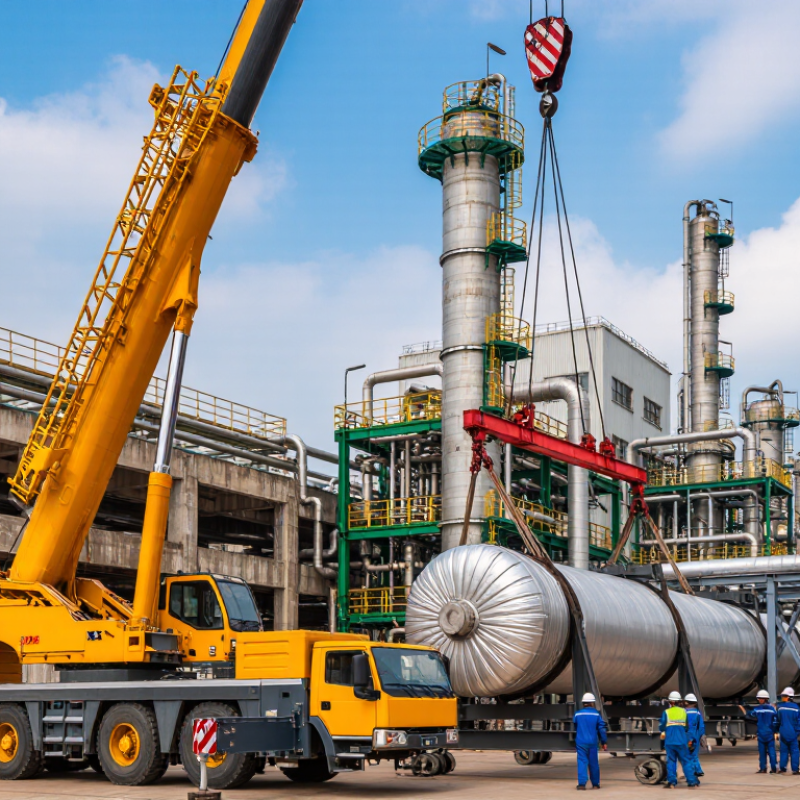
What Equipment Lifting Costs Mean in Petrochemical Facilities
What Equipment Lifting Costs Mean in Petrochemical Facilities
Equipment lifting costs cover more than crane rental. They include lift planning, engineering reviews, transport, rigging, permits, inspections, standby time, and specialist labor. In a petrochemical facility, a single vessel may arrive on a multi-axle trailer and move through congested pipe racks. Every meter matters.
The Construction Industry Institute reports that stronger front-end planning can reduce project costs by about 20% and schedules by up to 39%. Its findings explain why lifting studies should begin before equipment fabrication.
Engineers need verified weights, center-of-gravity data, ground-bearing checks, and realistic weather allowances. A missed detail can create expensive crane downtime.
Sometimes, the drawing looks perfect.
Cost also reflects risk control. The International Labour Organization estimates that work-related causes contribute to nearly three million deaths worldwide each year. That figure covers all industries, not petrochemical lifting alone, but it shows why competent supervision and inspection cannot be treated as optional expenses.
Planned exclusion zones, certified lifting accessories, and clear communication protect workers and reduce disruption.
Actual costs remain difficult to predict. Steel modules may arrive late, soil conditions may differ, or a larger crane may become necessary after a late design change. Industry estimates often understate these uncertainties.
A practical budget should separate fixed engineering costs from variable crane hours, fuel, standby charges, and weather delays. Reviewing those assumptions with experienced lifting personnel can reveal gaps that spreadsheets overlook.
Even then, the estimate deserves another review.
How Facility Design and Equipment Weight Influence Lifting Expenses
Petrochemical lifting costs rise when facility design forces cranes to work farther, higher, or within tighter clearances. A 50-ton vessel may appear manageable on paper, yet its lifting moment changes sharply as the radius increases. At a 20-meter radius, the load creates 1,000 tonne-meters before adding rigging, wind limits, and dynamic effects. Larger cranes, stronger ground preparation, and longer road closures may then become necessary.
Equipment weight is only one part of the estimate. Layout matters just as much. Crowded pipe racks can require a taller boom, tandem lifting, or temporary steel platforms. A late design change can also move a lifting point several meters, making an earlier crane study unreliable. The Construction Industry Institute has reported that rework can reach about 5% of total construction cost, although actual results vary by project quality and scope. That percentage may hide a costly reality: redesigning a heavy lift can affect engineering, transport, permits, and installation crews at once.
Labor availability adds pressure. The Associated General Contractors’ 2024 workforce survey found that 94% of construction firms struggled to fill hourly craft positions. Specialist riggers and signal persons are not easily replaced. In practice, a delayed lift may keep a crane, crew, and exclusion zone idle for hours. I have seen estimates focus on crane rental while underpricing ground mats, night work, weather delays, and connection testing. The spreadsheet looked precise. The assumptions were not.
Why Do Petrochemical Facilities Lift Equipment Costs? - How Facility Design and Equipment Weight Influence Lifting Expenses
How Site Conditions and Safety Requirements Affect Lifting Operations
Petrochemical facilities often lift equipment in congested and high-risk environments. Heavy vessels, heat exchangers, and pipe modules require specialized cranes, rigging, and detailed planning. Costs increase when equipment must travel through narrow access roads or operate beside active process units. A small change in crane position can require additional mats, counterweights, or engineering checks.
Ground conditions are a major factor. Soft soil may need steel plates or temporary foundations before a crane arrives. Uneven surfaces can reduce stability and limit lifting capacity. Wind, rain, heat, and poor visibility also affect the work schedule. Experienced planners study load charts, underground services, overhead lines, and nearby structures before selecting equipment. Still, no survey is perfect. Field conditions can differ from drawings, especially around older facilities.
Safety requirements add further time and cost. Workers may need gas testing, exclusion zones, permit controls, emergency access, and continuous communication with operations teams. Lifting near live equipment demands careful isolation and strict movement limits. I have seen a short lift become a full-day operation because one access gate was too narrow. That delay seemed avoidable, but the safer decision protected people and equipment. Supervisors may also pause work when wind readings approach the approved limit. Such pauses can frustrate schedules, yet rushing a suspended load creates far greater consequences.
Methods for Controlling and Reducing Petrochemical Equipment Lifting Costs
Why Do Petrochemical Facilities Lift Equipment Costs?
Controlling petrochemical lifting costs starts before a crane reaches the gate. McKinsey Global Institute found construction productivity has grown about 1% annually for decades. Poor lifting coordination can worsen that gap. A 2023 U.S. Bureau of Labor Statistics report recorded 1,075 fatal work injuries in construction. Safety shortcuts are expensive.
Create a lift register during front-end engineering. Record each vessel’s weight, center of gravity, lifting points, route, radius, and required weather limits. Then compare crane capacity at the actual working radius, not its advertised maximum. For example, an 80-ton exchanger may require a much larger crane when positioned 35 meters away. That single detail can change rental, transport, and assembly costs.
Use modularization only after checking road access, foundation loads, and installation sequence. Standard lifting beams and reusable rigging can reduce fabrication and inspection expenses. Coordinate deliveries tightly. A crane waiting beside an empty laydown area still generates rental and crew costs. Track utilization, standby hours, fuel, inspections, and weather delays daily. Industry cost reviews, including the 2024 International Construction Market Survey, continue to identify labor scarcity and schedule pressure as major project risks. Digital tracking helps, but it does not replace an experienced lift supervisor.
Our estimates are rarely perfect. Soil conditions change. Wind arrives early. A contingency based only on crane price is too narrow. Include engineering revisions, permits, access repairs, and standby exposure. That is where many budgets quietly fail.




 Ms.Lily International Sales Director
 Join 3S Group