Top 10 Construction Hoist Options for Global Buyers?
In the dynamic world of construction, selecting the right equipment is crucial. Among various tools, the "Construction Hoist" stands out for its efficiency. For global buyers, understanding the best options is vital. These hoists play a key role in lifting heavy materials to elevated heights, ensuring safety and productivity on site.
However, not all construction hoists are created equal. Buyers must navigate through numerous factors such as load capacity, installation flexibility, and operational speed. Each project has unique needs, which means a one-size-fits-all approach won’t suffice. Mistakes in choosing the right hoist can lead to delays and increased costs.
This guide presents the top 10 construction hoist options available today. By exploring these high-quality options, buyers can make informed decisions. Whether working on high-rise buildings or industrial facilities, the right construction hoist enhances efficiency. Ultimately, investing in the right equipment is essential for successful project execution and safety.
Overview of Construction Hoists and Their Importance in the Industry
Construction hoists play a crucial role in the industry. They are essential for moving materials and personnel safely. The efficiency of a construction project often hinges on effective transportation systems, and hoists are integral to this process. Their importance cannot be overstated. They enhance productivity by reducing the time spent on vertical transport.
Different types of construction hoists serve various needs. From rack and pinion systems to other mechanical designs, each has specific advantages. For instance, certain hoists offer higher load capacities. However, not all hoists are suited for every environment. This mismatch can lead to delays and safety risks. It’s vital for buyers to assess their project requirements meticulously.
Moreover, the choice of hoist affects the overall safety of the worksite. Regular maintenance is essential to avoid malfunctions. Neglecting this can lead to accidents, prompting reflection on operational practices. The goal is to create a safer and more efficient working environment. Understanding the complexities surrounding hoist options is key to making informed decisions in this competitive industry.
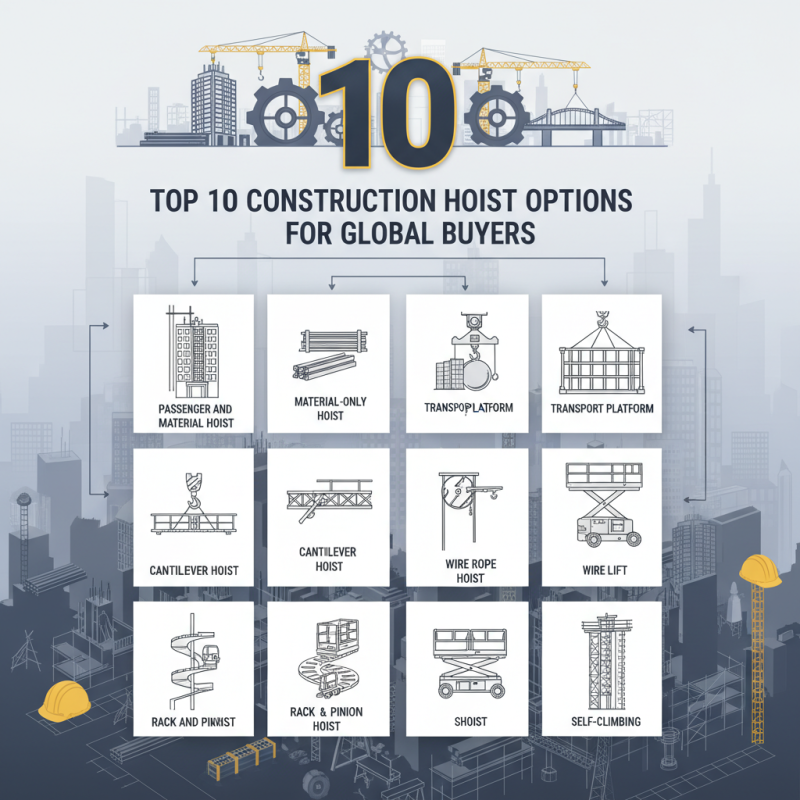
Top 10 Construction Hoist Options for Global Buyers
| Hoist Type |
Load Capacity (kg) |
Lift Speed (m/min) |
Height (m) |
Power Supply (V) |
| Construction Passenger Hoist |
2000 |
40 |
150 |
380 |
| Construction Material Hoist |
1500 |
30 |
120 |
220 |
| Rack and Pinion Hoist |
1000 |
20 |
80 |
400 |
| Building Hoist |
3000 |
50 |
200 |
380 |
| Electric Hoist |
500 |
15 |
30 |
220 |
| Heavy-duty Hoist |
4000 |
60 |
250 |
380 |
| Construction Scaffold Hoist |
750 |
25 |
60 |
220 |
| Mini Hoist |
300 |
10 |
30 |
220 |
| Freight Hoist |
2000 |
35 |
150 |
380 |
| Industrial Hoist |
1200 |
20 |
90 |
220 |
Key Features to Consider When Selecting a Construction Hoist
When selecting a construction hoist, several key features can significantly impact efficiency and safety. Load capacity is paramount. A hoist that cannot support the required weight can lead to dangerous situations. Consideration of the maximum load limit and its frequency of use is crucial. Regular assessments can help avoid costly failures.
Another essential aspect is the speed of operation. Faster hoists can enhance productivity but may compromise safety if not monitored. A balance between speed and control is vital. Safety features like emergency stops, overload protection, and safety alarms also play a critical role in preventing accidents. Look for hoists that incorporate these features as standard.
Usability is often overlooked. The ease of installation and operation affects both time and labor costs. Training requirements for operators must also be considered. Assessing user-friendliness can prevent inefficiencies and ensure a smoother operation. Therefore, buyers should reflect on their specific needs and site conditions to make informed choices about the right construction hoist.
Top 10 Construction Hoists: A Comparative Analysis of Leading Options
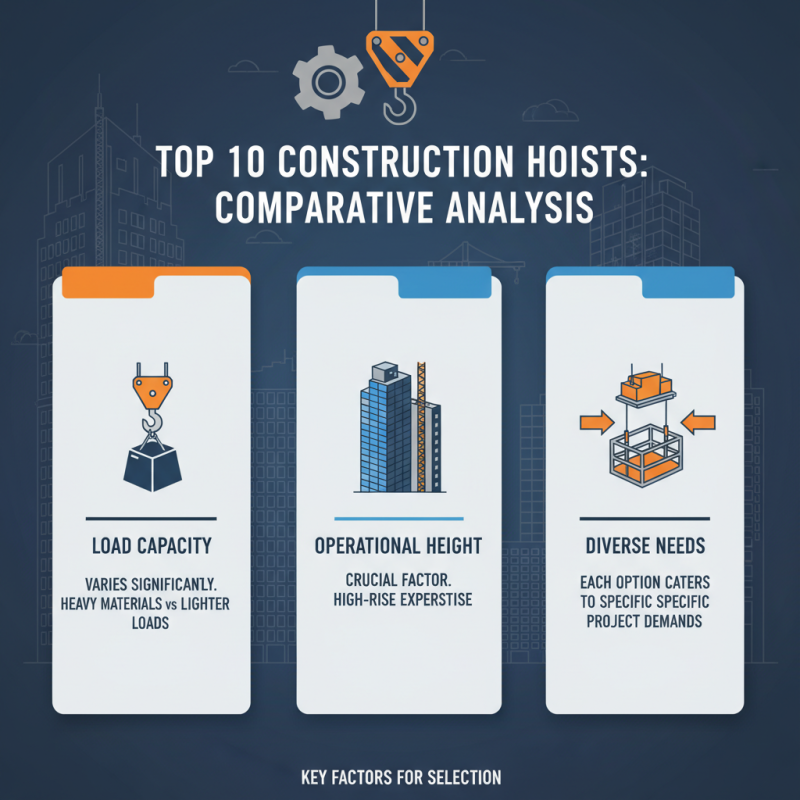
When considering construction hoists, a variety of factors come into play. Each option caters to different needs. Load capacity varies significantly among models. Some hoists can lift heavy materials, while others are ideal for lighter loads. Assessing the operational height is crucial. Certain hoists excel in high-rise environments, making them suitable for skyscrapers.
The ease of installation and use is another vital aspect. Some models require extensive setup time, which can delay projects. Others are designed for quick assembly, promoting efficiency on-site. Safety features should never be overlooked. It’s essential to ensure reliable brakes and emergency protocols. The reliability of these features often reflects the manufacturer’s commitment to safety.
Another important consideration is maintenance. Many hoists need regular inspections and upkeep. Some options, however, have a more user-friendly design, simplifying this process. Buyers should reflect on the long-term investment. Cheaper models may save money upfront but often lead to higher repair costs. Balancing cost and durability is a complex challenge for construction managers. Ultimately, assessing all these factors ensures a well-informed decision when selecting the right construction hoist.
Global Market Trends Influencing Construction Hoist Selection
The construction hoist market has seen significant changes driven by various factors. According to a recent market report, the global construction hoist market is expected to grow at a CAGR of 5.2% from 2021 to 2026. This trend is influenced by increased urbanization, a surge in high-rise buildings, and the focus on worker safety.
Safety regulations are constantly evolving. Countries are implementing stricter safety standards, which impacts hoist selection. For instance, in Europe, compliance with the Machinery Directive 2006/42/EC is mandatory. Buyers must understand local regulations to choose the right equipment. This can lead to complexities that require additional research and consultation with experts in the field.
Environmental sustainability is another critical factor. Many contractors and developers prioritize eco-friendly solutions. Data from the International Energy Agency suggests that the construction sector contributes to 36% of global energy usage. As a result, buyers are looking for energy-efficient hoists that reduce their carbon footprint. It’s essential to reflect on how these choices align with long-term goals for sustainability in construction projects.
Safety Standards and Regulations for Construction Hoist Usage
Construction hoists play a crucial role in project efficiency but must be used with adherence to safety standards. The Occupational Safety and Health Administration (OSHA) outlines specific guidelines for the usage of construction hoists. These regulations emphasize the importance of operator training and regular equipment inspections. A report by the International Organization for Standardization (ISO) shows that compliance with safety regulations can reduce accident rates by up to 50%.
The body harnesses and anchorage points are vital for worker safety. According to the ANSI/ASSE A10.28 standard, every construction hoist should have fall protection systems. Yet, many companies overlook these requirements, leading to unsafe practices. Research indicates that about 30% of construction site injuries involve falls. This alarming statistic highlights the need for stricter adherence to safety protocols, and regular safety audits could significantly improve the situation.
While advancements have been made in construction hoist technology, safety remains a persistent issue. A study from the National Institute for Occupational Safety and Health (NIOSH) found that human error accounts for 70% of construction accidents. This underscores the importance of fostering a culture of safety. For successful implementation of safety standards, continuous training and feedback loops are essential. The industry must take a reflective approach to improve practices and ensure worker safety.






 Ms.Lily International Sales Director
 Join 3S Group