How to Stay Safe While Working at High Altitude?
High-altitude work presents unique challenges and dangers. Professionals like Dr. Sarah Thompson emphasize safety precautions. She once said, "In high-altitude work, awareness is your best safety tool."
Working at elevated heights requires more than just skill. Proper gear and training are crucial. Equipment must be checked regularly. A lapse in safety can lead to serious accidents. For instance, harnesses can save lives, but they must fit correctly.
Many overlook the risks associated with altitude. It's easy to focus solely on the task. However, distractions can result in tragic outcomes. High-altitude work demands constant vigilance. Even experienced workers must reflect on their safety habits. Continuous training and awareness set the foundation for safe practices in this demanding field.
Understanding High Altitude Hazards: An Overview of Risks
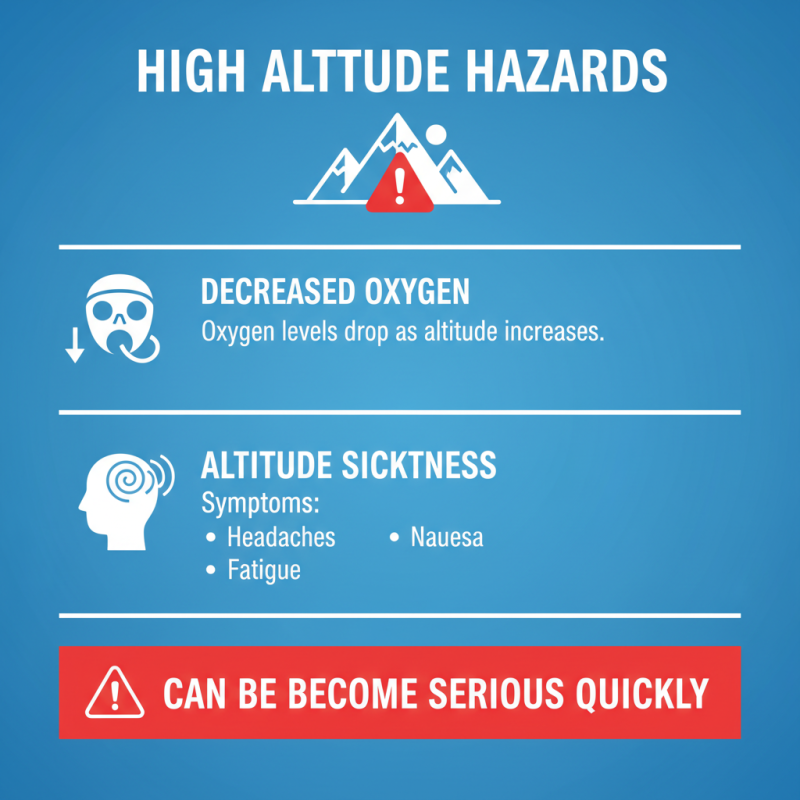
Working at high altitude brings unique hazards. Understanding these risks can help ensure safety on the job. Oxygen levels decrease as altitude rises. This can lead to altitude sickness. Symptoms include headaches, nausea, and fatigue. These issues can quickly become serious.
It is vital to acclimatize before starting any heavy work. Spend a few days at a higher elevation to allow your body to adjust. Hydration is crucial. Drink ample water to combat dehydration, which can worsen altitude symptoms.
Be aware of weather changes. Conditions can shift rapidly in mountainous areas. Strong winds, rain, or snow can create dangers like falling rocks or slips. Always check the forecast before heading out.
Having the right gear is essential. Wear sturdy boots with good grip. A helmet can protect against falling debris. Small, simple precautions can save lives in high-altitude conditions. Stay informed about your surroundings and trust your instincts. If you feel unwell, consider descending to a lower altitude to recover.
Essential Safety Gear for High Altitude Work: What You Need
Working at high altitude presents unique challenges.
Safety gear is essential for protecting workers from potential hazards.
A reliable harness is a must-have. It helps secure you to a stable structure.
The right harness ensures you stay safe during your tasks.
Another critical piece of equipment is a helmet. At high altitudes, falling objects pose a serious risk.
A well-fitted helmet can reduce the chance of injury. Additionally, don’t overlook the importance of sturdy gloves.
They provide grip and protect your hands from harsh elements.
Consider thermal gloves for colder environments as well.
Visibility is also vital.
High-visibility clothing can help keep workers seen in low-light conditions.
This is especially true during dawn or dusk.
Workers might not always think about layers. Proper layering can protect against extreme temperatures.
Reflect on your gear choices regularly. Are they meeting your needs?
High-altitude work demands attention to safety.
Every piece of gear plays a crucial role.
Best Practices for Fall Prevention and Protection Techniques
Working at high altitude can be risky. Effective fall prevention is crucial. Using guardrails is a common practice. They provide a physical barrier and can prevent accidental falls. Ensure guardrails are installed properly. Regular inspections can help identify wear and damage.
Harnesses are another important tool. They should fit well and be comfortable. Working without one can lead to serious injuries. Additionally, it’s essential to use lanyards properly. Secure attachment points are vital for safety. Make sure your equipment is suitable for high-altitude tasks.
Worker training is key. It’s a way to refresh knowledge on safety protocols. Even experienced workers can overlook details. Sometimes, sharing experiences can highlight risks that others may not see. Always encourage open discussions about safety. This builds a culture of awareness and vigilance.
Health Preparedness: Managing Altitude Sickness and Related Issues
Working at high altitude comes with unique health challenges. Altitude sickness, also known as acute mountain sickness, can develop suddenly. It often occurs above 8,000 feet, causing symptoms such as headache, nausea, and fatigue. You might feel strong one moment and unwell the next. Awareness of these symptoms is crucial for safety.
Preparing for high-altitude work involves understanding your body’s response to low oxygen levels. Hydration plays a key role. Drink plenty of water to combat dehydration, which can exacerbate symptoms. Don't ignore feelings of dizziness or shortness of breath. These can be red flags indicating that your body is struggling.
Acclimatization is essential. Gradually ascending to higher elevations helps your body adjust. Make sure to allow rest days. However, not everyone will acclimatize effectively. Some may still experience issues despite taking precautions. Be honest with yourself about your limits and seek medical advice if needed. Keeping communication open with your team can also help identify problems early.
Altitude Sickness Management by Percentage of Affected Workers
Emergency Response Strategies for High Altitude Work Environments
High altitude work environments pose significant risks. Emergency response strategies are crucial. High altitude sickness affects around 20% of workers. This can lead to serious complications, including acute mountain sickness (AMS). Recognizing AMS symptoms early can save lives. Headaches, nausea, and dizziness should not be ignored. Workers must be educated about these signs.
Regular emergency drills are vital. They prepare teams for real-life situations. The Occupational Safety and Health Administration (OSHA) recommends training every six months for high-altitude work. Proper gear can halt many injuries. Oxygen supplies should be accessible. In situations of severe illness, always call for medical help. Lack of immediate response can worsen outcomes.
Communication is key. Workers must stay in touch with each other and supervisors. In remote areas, reliable radios are essential. Relying solely on cell phones can lead to failures. Teamwork cannot be overstated. Each member plays a role in ensuring safety. Sometimes, despite preparations, an emergency may still arise. Evaluation after an incident can help improve future responses.
How to Stay Safe While Working at High Altitude? - Emergency Response Strategies for High Altitude Work Environments
| Safety Measure |
Description |
Emergency Response Strategy |
| Acclimatization |
Gradual exposure to high altitudes to minimize altitude sickness. |
Monitor symptoms; descend if severe symptoms occur. |
| Personal Protective Equipment (PPE) |
Use of helmets, harnesses, gloves, and goggles. |
Inspect and replace damaged PPE immediately. |
| Emergency Communication Devices |
Radios or satellite phones for reaching help quickly. |
Establish check-in times and procedures; ensure devices are fully charged. |
| First Aid Training |
Training in basic first aid and mountain-specific conditions. |
Provide immediate attention; stabilize the injured before evacuation. |
| Weather Monitoring |
Checking forecasts to plan work schedules. |
Cease operations and seek shelter during storms or extreme conditions. |




 Ms.Lily International Sales Director
 Join 3S Group