Power Grid Tower Elevator selection is becoming a practical infrastructure decision, not merely an equipment purchase. Transmission towers often rise above 30 meters, with narrow platforms, exposed steelwork, and difficult weather conditions. A reliable elevator can reduce climbing fatigue, improve inspection access, and support safer maintenance routines.
The International Energy Agency reported in Electricity Grids and Secure Energy Transitions that the world’s electricity grids total about 80 million kilometres. It also estimates that 80 million kilometres of grids must be added or replaced by 2040. This expansion increases demand for dependable tower-access equipment, especially across remote substations and long-distance transmission corridors. IEA Executive Director Fatih Birol described grids as “the backbone of secure, clean energy transitions.” His statement highlights the wider responsibility behind every Power Grid Tower Elevator specification.
Global buyers typically compare rack-and-pinion elevators, traction systems, guided climbing platforms, and compact service lifts. Load capacity matters. So do emergency descent, corrosion resistance, rail alignment, braking redundancy, and technician training. A coastal tower may need stronger anti-corrosion protection than an inland installation. A desert project may require dust-resistant controls and wider temperature tolerances.
No universal “best” type exists. That is the uncomfortable part. Site geometry, tower height, rescue procedures, and local standards can change the answer. Buyers should verify test records, maintenance access, spare-parts availability, and supplier experience before comparing prices. The cheapest elevator may become expensive when one failed drive leaves technicians below the work platform.
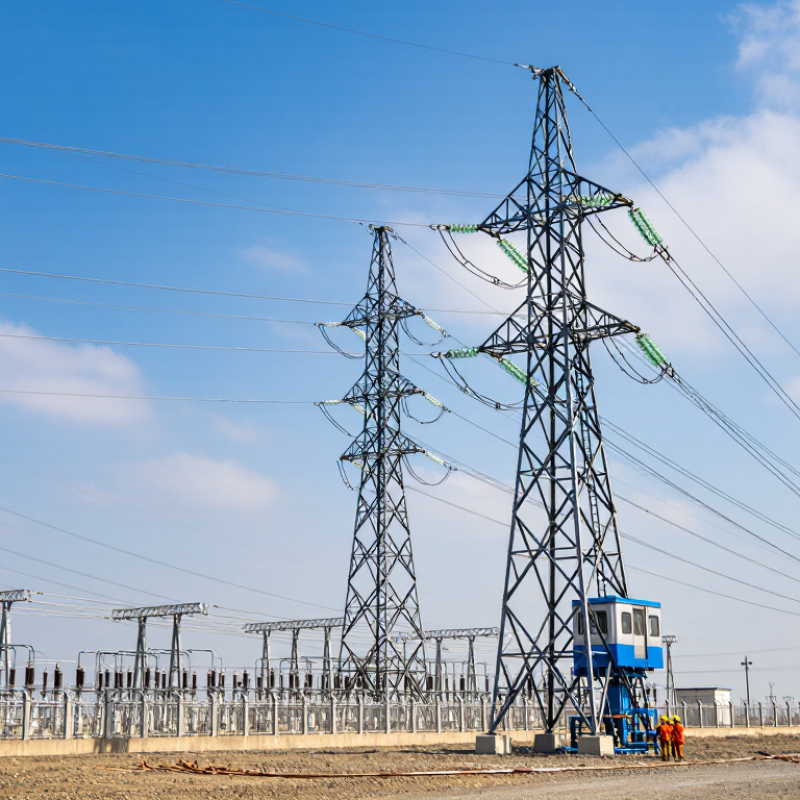
Power grid tower elevators support inspection, maintenance, and controlled access inside tall transmission structures. Their functions differ from ordinary building lifts. Some models carry technicians between platforms, while others move tools, cable drums, and replacement components. A practical design must handle wind exposure, vibration, dust, rain, and repeated outdoor operation.
Rated loads commonly range from 100 to 1,000 kg. A 100–200 kg elevator may suit one technician with a compact tool kit. Medium ratings can carry several workers and testing equipment. Units near 1,000 kg may support heavier maintenance materials, but tower geometry and platform strength still limit safe use. The elevator rating does not automatically increase the tower’s capacity.
Load planning needs real measurements. Include passengers, tools, batteries, protective equipment, and temporary materials. Dynamic movement can create higher forces than a stationary load. A neat spreadsheet can still mislead. Field teams should confirm shaft dimensions, travel height, landing positions, and power availability before purchasing.
Safety functions deserve close attention. Look for door interlocks, emergency stopping, overspeed protection, controlled descent, overload sensing, and backup communication. A power failure must not leave occupants trapped without a defined rescue procedure. Local electrical, lifting, and workplace rules may differ between countries. Buyers should request test records, maintenance instructions, corrosion protection details, and clear training requirements. The cheapest rating is rarely the best fit.

Representative rated-load classes used when specifying elevators and service lifts for power grid towers. Smaller capacities generally support personnel and tools, while higher ratings are intended for materials, maintenance equipment, and heavier components.
Ratings shown are nominal capacity classes from 100 to 1,000 kg. Actual selection depends on tower height, travel speed, duty cycle, platform size, installation conditions, and applicable local safety regulations.
Rack-and-pinion lifts suit tall transmission towers where stairs consume time and worker energy. Typical rated speeds range from 0.3 to 1.0 m/s. At 0.6 m/s, a 60-meter climb takes about two minutes, excluding entry and landing stops. That matters during inspections, repairs, and emergency response.
A guarded car, interlocked gates, overspeed protection, and a manual lowering system should be specified. Small details matter.
The International Energy Agency’s Electricity Grids and Secure Energy Transitions report projects about 80 million kilometers of new or refurbished grids by 2040. It also estimates annual grid investment must exceed 600 billion dollars by 2030.
More towers mean more vertical access points. Buyers should match lift speed with tower height, duty cycle, wind exposure, and available power. EN 12159 provides a useful reference for construction hoists, but project engineers must confirm the applicable regional requirements. One standard rarely answers everything.
In field checks, rack engagement, brake response, and platform alignment deserve close attention. A lift that feels slow may still be safer on a narrow tower. Conversely, excessive acceleration can unsettle tools and workers. The 0.3–1.0 m/s range is practical, not automatically optimal.
I would also review rescue access during a power failure. This is often overlooked.
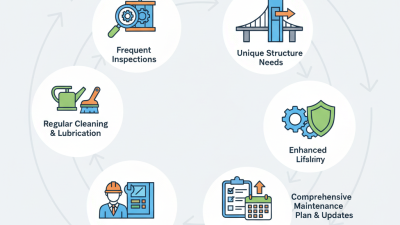
Maintenance records should track vibration, tooth wear, lubrication, and repeated safety trips. Some specifications remain too optimistic about dust, rain, and ice. Real towers are less forgiving.
Top Power Grid Tower Elevator Types for Global Buyers
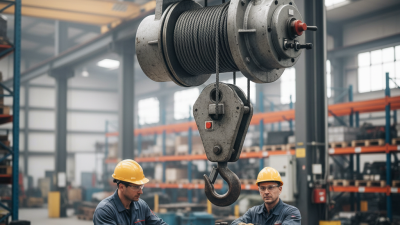
Wire-rope hoists suit power grid towers requiring 100–500 m lifting heights. They use a traction drum or sheave, steel rope, guided cages, and controlled braking. The IEA’s Electricity Grids and Secure Energy Transitions report estimates annual grid investment must exceed $600 billion by 2030. More construction means more vertical access equipment, especially for remote substations and transmission structures.
Height alone does not define the correct hoist. Duty rating matters more than many buyers expect. ISO 4301-1 and FEM 9.511 classify lifting mechanisms by working time and load spectrum. A unit used twice daily may need a lower class than one carrying technicians every hour. For a 180 m tower, engineers should check rated load, rope safety factor, emergency descent, wind exposure, and landing accuracy. A 250 kg service cage can behave very differently from a 500 kg maintenance cage.
The difference is real. A neat rating can still mislead. Buyers should request cycle data, not only maximum height. They should also review brake tests, rope inspection records, overspeed protection, and local electrical compatibility. At 500 m, rope weight and sway become serious design inputs. I would not specify from height alone. Field access, climate, corrosion, rescue procedures, and maintenance skills can change the safest choice. Even a technically compliant hoist may perform poorly when inspections are rushed or spare parts are unavailable.
| Hoist Type | Typical Lifting Height | Typical Rated Load | Typical Hoisting Speed | Duty Rating Reference | Recommended Power-Grid Use | Key Selection Characteristics |
|---|---|---|---|---|---|---|
| Fixed Electric Wire-Rope Hoist | 100–250 m | 0.5–5 t | 4–12 m/min | ISO M3–M5 FEM 1Bm–2m |
Raising transformers, insulators, tools, cable drums, and maintenance materials at substations or tower work areas. | Simple installation, compact layout, fixed suspension points, and suitable for intermittent material lifting. |
| Low-Headroom Wire-Rope Trolley Hoist | 100–300 m | 1–10 t | 5–15 m/min | ISO M4–M6 FEM 2m–3m |
Material handling where the available headroom is limited below gantries, platforms, or steel support structures. | Efficient use of vertical clearance, motorized or push-travel trolley options, and improved positioning along a runway beam. |
| Double-Girder Trolley Wire-Rope Hoist | 100–350 m | 5–50 t | 2–10 m/min | ISO M5–M7 FEM 3m–4m |
Heavy components such as power transformers, switchgear assemblies, generator parts, and large cable equipment. | High structural rigidity, greater load capacity, stable lateral travel, and suitability for frequent industrial handling. |
| Open-Winch Wire-Rope Hoist | 150–500 m | 10–100 t | 1–8 m/min | ISO M6–M8 FEM 3m–5m |
High-capacity lifting at transmission infrastructure, large substations, hydroelectric facilities, and major construction sites. | Modular drum, gearbox, motor, and brake arrangement; suitable for high loads, long lifts, and demanding duty cycles. |
| Two-Speed Wire-Rope Hoist | 100–250 m | 0.5–10 t | Fast speed: 6–15 m/min Slow speed: 0.6–2 m/min |
ISO M3–M6 FEM 1Bm–3m |
Installation and maintenance tasks requiring rapid travel together with controlled final positioning. | Improves load placement accuracy and helps reduce impact during landing, alignment, and connection work. |
| Variable-Frequency-Drive Wire-Rope Hoist | 100–500 m | 1–30 t | 1–20 m/min Application-dependent |
ISO M4–M7 FEM 2m–4m |
High-value electrical equipment, precision installation, and lifting routes requiring smooth acceleration and deceleration. | Adjustable speed, reduced mechanical shock, controlled stopping, and improved handling of fragile or sensitive loads. |
| Multi-Reeved Wire-Rope Hoist | 200–500 m | 10–100 t | 0.5–6 m/min | ISO M5–M8 FEM 3m–5m |
Long-height lifting where higher rope-pull capacity, improved load stability, or reduced single-rope tension is required. | Multiple rope falls increase mechanical advantage but require careful reeving, sheave alignment, rope inspection, and drum capacity checks. |
| Weather-Resistant Outdoor Wire-Rope Hoist | 100–350 m | 1–30 t | 2–12 m/min | ISO M4–M6 FEM 2m–3m |
Outdoor substations, transmission-line construction, coastal sites, and exposed tower maintenance locations. | Requires suitable enclosure protection, corrosion-resistant components, protected brakes, proper drainage, and an environmental design suitable for rain, dust, and temperature variation. |
| Explosion-Protected Wire-Rope Hoist | 100–250 m | 0.5–10 t | 2–10 m/min | ISO M3–M5 FEM 1Bm–2m |
Specialized areas where a hazardous-area classification applies, subject to the site risk assessment and applicable local regulations. | Electrical and mechanical equipment must be selected according to the required hazardous-area classification; not necessary for ordinary outdoor power-grid sites. |
| Personnel-Rated Wire-Rope Hoist System | 100–500 m | System-specific; based on the approved personnel cage or platform capacity | Typically lower than material-only lifting systems | Must comply with applicable personnel-hoist regulations and certification requirements | Transporting authorized workers only when the complete system is specifically designed, certified, installed, and operated for personnel lifting. | A standard material hoist must never be used to carry people. Personnel lifting requires dedicated protective devices, emergency systems, inspections, rated access equipment, and legal approval. |
| Technical selection note: The height, load, speed, and duty ranges shown are typical engineering selection bands rather than guaranteed product specifications. Final selection should verify rope diameter and construction, drum capacity, reeving arrangement, structural support, braking system, duty cycle, wind exposure, ambient temperature, power supply, emergency limits, inspection access, and all applicable local standards. ISO M classifications and FEM duty groups are commonly used reference systems; their exact interpretation should be confirmed against the governing design standard. | ||||||
Choosing a tower hoist starts with the worksite, not the maximum rated load. A two-person hoist suits routine inspections on narrow lattice towers. It usually needs less space and may simplify temporary installation. However, rescue work can require extra room for injured workers, attendants, or medical equipment.
Four-person hoists offer a practical middle ground for many power grid projects. They support inspection crews without creating excessive platform congestion. Six-person models provide better flexibility for maintenance teams carrying tools, fall-protection equipment, and replacement parts. Eight-person hoists are useful on large structures, but their greater size can increase tower loading, installation demands, and evacuation planning.
Capacity alone can mislead buyers. A hoist rated for eight people may have a lower useful payload after tools and rescue equipment are included. Check cabin dimensions, door width, braking behavior, emergency lowering, and backup power arrangements. Test controls while wearing gloves. Small details matter.
In field assessments, I have seen teams choose larger hoists for comfort, then struggle with transport and anchoring. That choice is not always wrong. It needs evidence. Compare travel height, lifting speed, weather exposure, inspection access, and local safety requirements. Personnel transport and rescue readiness should be evaluated separately, even when one hoist serves both purposes. Practical trials often reveal limitations that catalog figures hide.
Power grid tower elevators must match tower height, maintenance routines, and rescue conditions. Guided traction elevators suit tall towers with repeated vertical travel. Rack-and-pinion systems can support rugged industrial access and simpler installation. Hydraulic designs may fit shorter structures, but temperature changes and fluid maintenance require careful review. Selection should begin with the work environment, not only rated load.
EN 81-20 provides important safety principles for lift design, construction, and installation. Review door locking, shaft protection, car strength, and emergency access. IEC 60204-1 helps assess electrical equipment, wiring, controls, grounding, and protective circuits. Its application may depend on the elevator configuration and local interpretation. Local codes remain decisive. They may require additional fire protection, weather resistance, inspection intervals, or emergency communication. A compliance certificate alone is not enough.
Tips: Ask suppliers for a clause-by-clause compliance matrix. Check drawings against the actual tower, including narrow platforms, cable routes, lightning protection, and winter access. Test rescue procedures with trained personnel before operation. A checklist can still miss practical hazards. Review it on site.