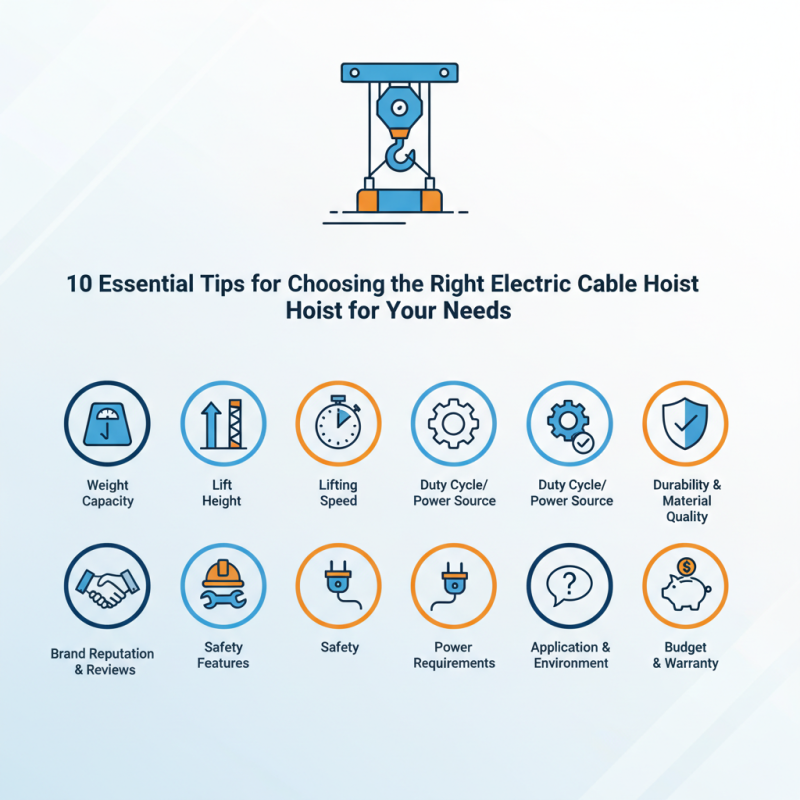
10 Essential Tips for Choosing the Right Electric Cable Hoist for Your Needs
Selecting the right Electric Cable Hoist is crucial for your projects. It can significantly enhance efficiency and safety. Many options are available on the market, which can be overwhelming. Therefore, understanding key features is vital.
An ideal Electric Cable Hoist should match your lifting needs. You might consider factors like weight capacity, lift height, and speed. Thinking through your requirements can prevent future complications. Picking the wrong model can lead to operational issues.
Don't overlook the importance of durability and brand reputation. Researching different models may take time, but it's worth the effort. Remember, choosing a reliable Electric Cable Hoist can make a big difference. It might be tempting to rush the decision, but reconsidering your options is essential.
Understanding Different Types of Electric Cable Hoists Available in the Market
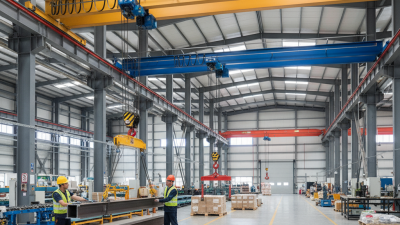
When it comes to electric cable hoists, understanding the various types available is essential. There are different designs tailored for specific applications. Some hoists are lightweight, ideal for small jobs. Others are robust, suitable for heavy lifting tasks in construction or industrial environments.
Portable electric hoists are popular for their ease of use. They can be moved effortlessly from one location to another. Fixed electric hoists, on the other hand, are mounted in one place. These are great for regular lifting tasks but can be challenging to disassemble.
Consider the weight capacity of each hoist type. This is crucial for safety and effectiveness. A hoist that cannot support your load is a recipe for disaster. Think about the power source too. Some require standard electrical outlets, while others may need special configurations. Assessing your specific needs will help you choose wisely.
Key Specifications to Consider When Selecting an Electric Cable Hoist
When selecting an electric cable hoist, key specifications can greatly influence your choice. First, consider the load capacity. This measurement indicates how much weight the hoist can handle safely. Underestimating this can lead to dangerous situations. It's crucial to calculate your maximum load accurately. An incorrect assessment could mean using the hoist beyond its limits.
Another important factor is lift height. Ensure the model you choose can accommodate your needs. If you need to lift items to significant heights, look for hoists designed for this purpose. Check the speed of lifting as well. A hoist that lifts too slowly may frustrate your workflow. You must also consider the power source. Electric hoists typically require a steady power supply. Make sure you have access to the required voltage and current.
Don’t overlook safety features. Emergency stop buttons and overload protection systems are vital. However, these can differ between models. Sometimes, manufacturers may not highlight these features clearly. It’s essential to do your research and read user reviews. Assessing reliability over time can provide insight into performance and safety.
Electric Cable Hoist Specifications Comparison
Assessing Load Capacity and Weight Limitations for Your Specific Needs
Choosing the right electric cable hoist begins with understanding load capacity and weight limitations. It's crucial to assess the maximum weight you plan to lift. Many hoists offer specific weight limits. Selecting a hoist with a rating too close to your required load can be risky. It's wise to have a buffer. If you're lifting 1,000 pounds, look for a hoist rated for at least 1,200 pounds.
Consider the types of loads you’ll handle. Some hoists excel with lightweight materials, while others handle bulkier objects. Each project has its demands. A miscalculation here can lead to accidents or equipment failure. It’s essential to review your operational environment. For example, if you work in tight spaces or uneven surfaces, it may affect the load distribution. Reflect on past experiences with lifting. Were there times you underestimated weight? Those lessons will inform your choice. A thoughtful evaluation of these factors will lead you to the right hoist for your needs.
Evaluating Safety Features and Compliance Standards for Hoists
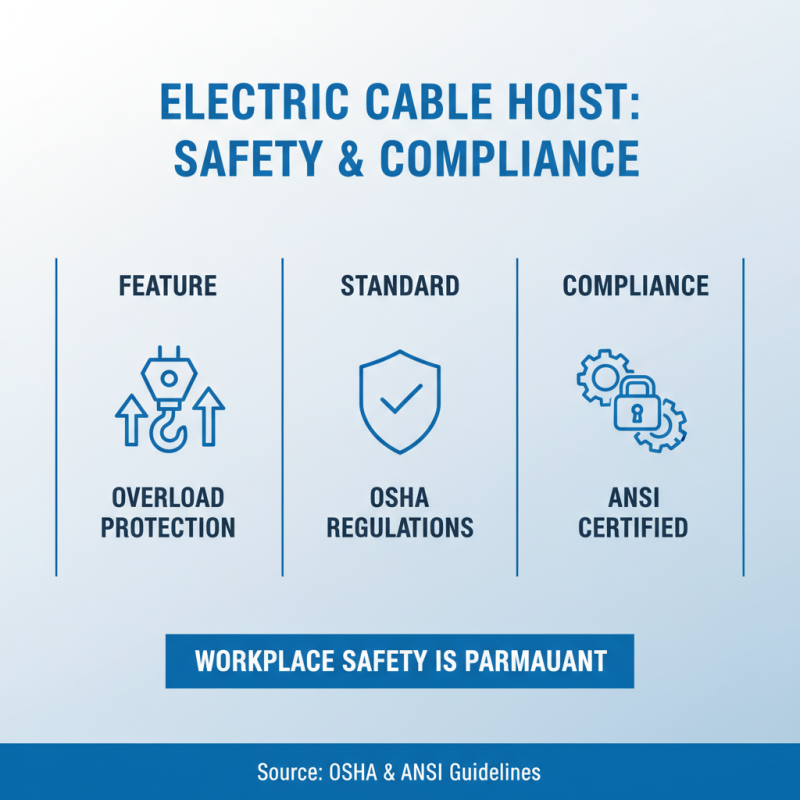
When selecting an electric cable hoist, safety features and compliance standards play a critical role. According to the Occupational Safety and Health Administration (OSHA), hoists must meet specific safety regulations to ensure workplace safety. For instance, the hoist should include overload protection to prevent accidents caused by lifting beyond capacity. A hoist that complies with ANSI standards is more likely to provide the necessary safety assurances.
Inspecting the hoist's safety features is vital. Look for devices like limit switches, which stop the hoist at preset heights. This feature helps reduce the risk of dropping loads unexpectedly. A report from the Bureau of Labor Statistics indicates that most workplace accidents occur during lifting operations. Therefore, ensuring your hoist has robust safety mechanisms can significantly lower risks.
Be mindful of the training required for operators. Proper training on the hoist’s functions is often overlooked. Statistics show that operators who lack training are more likely to misjudge load capacities. Evaluate your team’s experience before making a decision. Balancing safety with efficiency is crucial, and sometimes, this can be a tough call. The right hoist should not only meet technical specifications but also enhance operational safety in your environment.
Comparing Price and Warranty Options for Your Electric Cable Hoist Choice
When selecting an electric cable hoist, price and warranty options are crucial. A lower price might seem appealing at first. However, consider the long-term implications. Cheaper hoists may lack durability. They could lead to unexpected repair costs. This can be frustrating. Always balance initial costs with quality.
Warranty options vary widely among different sellers. A good warranty indicates confidence in the product. Some hoists offer one-year warranties, while others provide three years or more. A longer warranty typically means better protection. It can save you money on repairs in the future. Yet, read the fine print. Some warranties have limitations that might leave you unprotected.
Evaluate your specific needs alongside these factors. Do you need heavy lifting capabilities? Will you use the hoist frequently? These questions can guide your decision. Sometimes, the best choice is not the most obvious one. Prioritize features that matter most to you over initial price. This approach can lead to a safer and more efficient experience.





 Ms.Lily International Sales Director
 Join 3S Group