What is Electric Wire Rope Hoist and How Does It Work?
The Electric Wire Rope Hoist is a critical tool in material handling industries. According to a recent report by MarketsandMarkets, the global hoist market is projected to reach $5.4 billion by 2025. Electric Wire Rope Hoists enhance efficiency and safety in various operations. Industry expert John Smith once stated, "The Electric Wire Rope Hoist is essential for optimizing lifting tasks in complex environments."
These hoists offer powerful lifting capabilities, often lifting loads exceeding several tons. Their compact design allows for use in tight spaces, providing versatility. However, maintenance is a challenge. Regular inspections are crucial for safety and longevity. Ignoring upkeep can lead to failures, inviting peril in workplaces.
Moreover, while Electric Wire Rope Hoists are predominant, misconceptions remain. Some overlook their need for skilled operation and safety protocols. Operators must receive adequate training to maximize functionality. When mishandled, the results can be disastrous, reinforcing the need for education in this area.
What is an Electric Wire Rope Hoist?
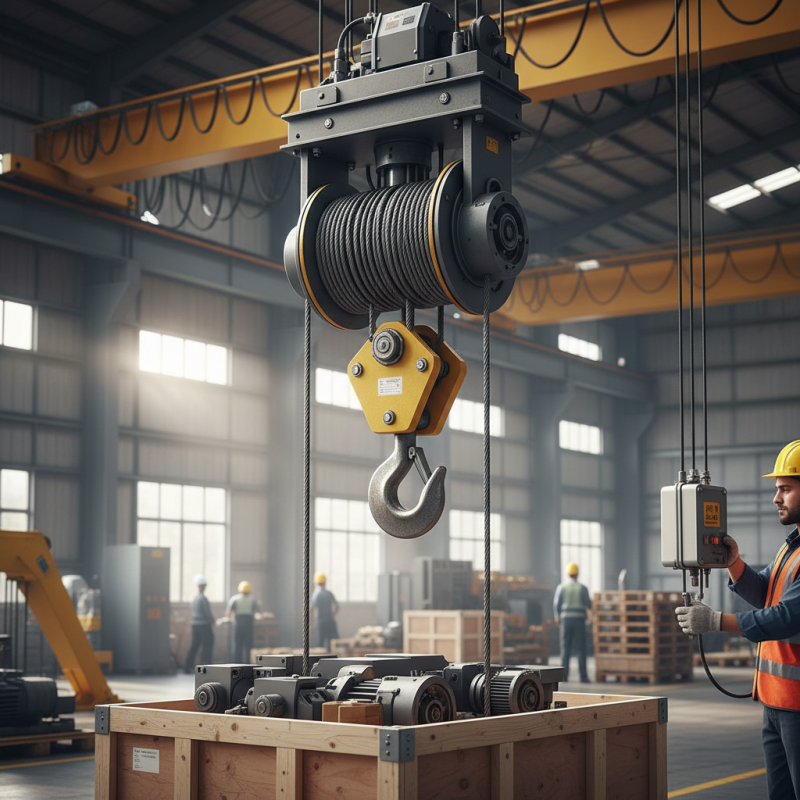
Electric wire rope hoists are essential tools in various industries. They are designed to lift and lower heavy loads with ease. Typically, these hoists consist of a motor, rope drum, and wire rope. The motor drives the rope drum, which winds and unwinds the wire rope. The design allows for precise control in lifting operations.
The global electric wire rope hoist market has seen significant growth. According to a recent industry report, it is expected to reach $2.7 billion by 2026. This growth reflects increasing infrastructure needs and automation in manufacturing. More construction sites are adopting electric hoists for efficiency. However, safety concerns arise as misuse can lead to accidents. An alarming statistic reveals that nearly 40% of hoisting-related injuries occur due to improper handling.
Key features of electric wire rope hoists include load capacity and lifting speed. Many models can lift up to 20 tons. The standard lifting speed ranges from 3 to 15 meters per minute. Although robust, these hoists require regular maintenance. Neglecting upkeep can lead to mechanical failures. Some operators overlook this crucial aspect, resulting in downtime and repairs. It's important to reflect on the balance between usage and maintenance for optimal performance.
Electric Wire Rope Hoist Load Capacity Comparison
Key Components of Electric Wire Rope Hoists
Electric wire rope hoists are essential for various lifting tasks. Understanding their key components helps us appreciate how they function. One crucial part is the motor, which generates the power required for lifting. This motor drives the gear system that increases torque. Operators can control the speed and direction of the hoist easily, making jobs safer and more efficient.
The wire rope itself is another important component. Made from high-strength steel, it provides the necessary durability for heavy loads. The rope wraps around a drum, and as the motor turns, it either lifts or lowers the load. It’s vital to check the rope regularly for wear and tear. Any sign of fraying could lead to dangerous situations.
Additionally, the controller allows operators to manage the hoist from a distance. A reliable controller enhances safety but can sometimes be overly complicated. This complexity may lead to mistakes if not understood properly. Regular training and practice can address these concerns. Electric wire rope hoists combine essential parts to efficiently lift heavy objects, but understanding their operation requires ongoing attention and learning.
How Electric Wire Rope Hoists Operate
Electric wire rope hoists are essential tools in various industries. They lift heavy loads with ease and efficiency. Understanding how they operate is crucial for safe usage. At the heart of these hoists lies an electric motor, which provides the necessary power. This motor drives a system of gears that reduce speed while increasing torque. The wire rope, wound onto a drum, transfers the lifting force to the load.
The hoist also includes a control pendant, allowing the operator to manage the lift. Users can easily adjust the speed and direction. Safety features are vital in electric wire rope hoists. Limit switches prevent overloading. They halt the operation at predetermined load limits. This is crucial for avoiding equipment failure and ensuring safety.
However, operating these hoists is not without challenges. Operators must be trained to handle them properly. Misuse can lead to accidents. Regular maintenance is essential to keep the hoist in good working order. Neglecting maintenance can result in unexpected breakdowns, which can be costly. Users need to remain vigilant and proactive in both operation and upkeep.
Applications of Electric Wire Rope Hoists in Various Industries
Electric wire rope hoists are vital in numerous industries. They provide a reliable solution for lifting heavy loads. The construction sector extensively uses these hoists. Approximately 40% of all electric hoists operate in this field. They enhance efficiency. Projects can be completed faster, improving overall productivity.
In manufacturing, electric wire rope hoists increase safety and precision. They often lift bulky materials, reducing manual handling. Reports indicate that workplaces with automated lifting solutions see a 30% drop in workplace injuries. These hoists also play a significant role in logistics. Airports use them to handle heavy cargo consistently. Timely delivery is crucial in this sector.
However, challenges remain. Regular maintenance is necessary to ensure safety. Operators must be trained to minimize risks. Some positions may still require manual lifting. This can lead to inefficiencies. Industries must balance automation with human capability. Investing in training is essential for maximizing benefits.
What is Electric Wire Rope Hoist and How Does It Work? - Applications of Electric Wire Rope Hoists in Various Industries
| Application Area |
Typical Load Capacity (tons) |
Common Features |
Used Industries |
| Construction |
1-20 |
Variable speed control, Overload protection |
Construction, Heavy lifting |
| Manufacturing |
0.5-10 |
High efficiency, Compact design |
Automotive, Aerospace |
| Warehousing |
0.5-5 |
Easy installation, Remote control |
Logistics, Retail |
| Mines |
10-30 |
Durable materials, Safety features |
Mining, Heavy industry |
| Shipping and Maritime |
5-20 |
Weather-resistant, High lifting speeds |
Shipping, Offshore operations |
Benefits of Using Electric Wire Rope Hoists for Material Handling
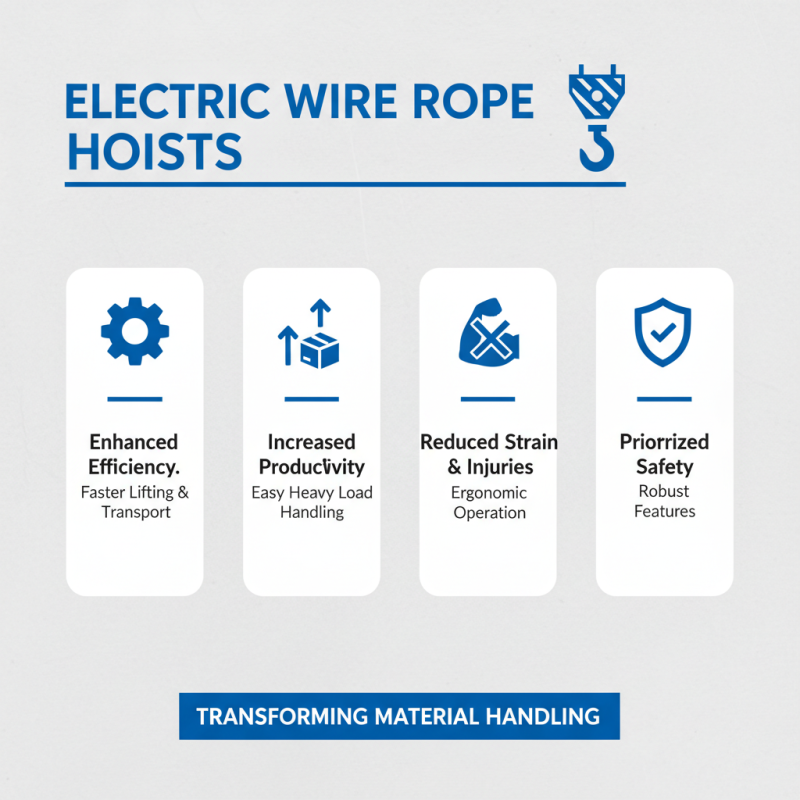
Electric wire rope hoists have transformed material handling in various industries. These devices enhance efficiency significantly. They allow lifting and transporting heavy loads with ease. Electric hoists eliminate the physical strain of manual lifting. This leads to reduced injuries in workplaces. Safety is a priority, and these systems offer robust features for operators.
Another notable benefit is their versatility. Electric wire rope hoists can be used in diverse settings. Factories, construction sites, and warehouses utilize them effectively. They adapt to various load capacities and heights. This flexibility can optimize operations, enabling businesses to adjust to different material handling needs. However, not all environments may achieve the same effectiveness. It's essential to assess specific requirements.
Ease of use is another appeal. Operators can quickly learn to manage these systems. Simple controls make operations accessible even for new staff. However, over-reliance on technology can pose challenges. Regular maintenance and operator training are crucial. Neglecting these aspects can lead to inefficiencies or accidents. Continuous evaluation of their usage is vital for optimal performance.







 Ms.Lily International Sales Director
 Join 3S Group