Aerial Work Fall Protection Essentials What You Need to Know
Aerial work presents unique challenges, especially regarding safety. Aerial Work Fall Protection is essential for anyone working at heights. Falls can occur suddenly and have serious consequences. Understanding proper fall protection methods is vital.
Many workers overlook safety measures. They might feel invincible when working high above the ground. Yet, this mindset can lead to tragic accidents. It's crucial to recognize that even the smallest oversight can lead to severe injury or death.
Education about Aerial Work Fall Protection starts with recognizing potential risks. Each job site is different, and hazards can vary. Workers must assess their environment and use appropriate safety equipment. This includes harnesses, guardrails, and scaffolding. Ignoring safety guidelines is a mistake that can cost lives. By prioritizing fall protection, we can create safer work environments for everyone.
Aerial Work Fall Protection: Understanding Industry Regulations and Standards
When working at height, fall protection is not just a guideline—it is an absolute necessity. Industry regulations play a crucial role in ensuring the safety of aerial work. Guidelines vary across sectors, but common standards emphasize the importance of personal protective equipment (PPE) and fall prevention systems. Employers must stay updated on these regulations to minimize workplace hazards.
Awareness of local and national standards is critical. These regulations often include training requirements for employees. The implementation of safety protocols can feel overwhelming at times. Many workers may overlook the need for routine safety checks. Compliance can become a challenge, especially with tight deadlines and pressures. It is essential to create a culture of safety that prioritizes adherence to these standards.
Regular audits can highlight areas needing improvement. Skipping these checks can lead to dangerous situations. Employers should encourage open discussions about safety concerns. Communication can foster a more secure work environment. Understanding the detailed requirements of each regulation can be daunting, yet it is vital. Investing time in training and education is key to preventing accidents and ensuring worker safety.
Key Statistics on Fall Hazards in Aerial Work Environments
In aerial work environments, fall hazards are a major concern. Statistics show that nearly one in four construction-related deaths is due to falls. This alarming figure highlights the need for effective fall protection strategies. Workers at heights face various risks, including unprotected edges and unstable surfaces. Proper awareness of these hazards can save lives.
Many incidents occur due to a lack of training or equipment misuse. Some workers often think, “It won’t happen to me.” This mindset can be dangerous. Regular safety meetings can change this mentality. Sharing real stories can reinforce the importance of fall protection. Visual aids and demonstrations help improve understanding of safety measures.
Moreover, nearly 65% of injuries result from falls that could have been prevented. Ensuring the use of personal protective equipment (PPE) is essential. However, workers must also know how to use the gear correctly. Even the best equipment is useless if not worn properly. Creating a culture of safety is crucial; complacency can lead to tragedy.
Essential Personal Protective Equipment for Aerial Work Safety
When working at heights, safety is of utmost importance. Aerial work often exposes workers to significant risks. The right personal protective equipment (PPE) is essential. Data shows that falls are one of the leading causes of fatalities in construction. According to the U.S. Bureau of Labor Statistics, nearly 33% of construction worker deaths come from falls. This grim statistic underscores the need for proper safety measures.
Harnesses are a vital part of aerial work safety. A well-fitted harness can save lives. Current guidelines recommend that harnesses be inspected before each use. Yet, many workers overlook this crucial step. Additionally, helmets equipped with impact resistance are necessary. They protect against falling debris and head injuries. In fact, studies suggest that proper headgear can reduce the risk of severe head injuries by up to 70%. Still, many do not use helmets consistently.
Footwear is another critical component. Workers should wear slip-resistant shoes. This helps prevent slips and falls while moving on ladders or rooftops. Yet, statistics indicate that only about 40% of workers follow this requirement. Regular training sessions on PPE use can make a difference. They reinforce the importance of wearing protective gear. Yet, without a consistent culture of safety, these measures may fall short. Improving adherence to safety protocols is a challenge that must be addressed.
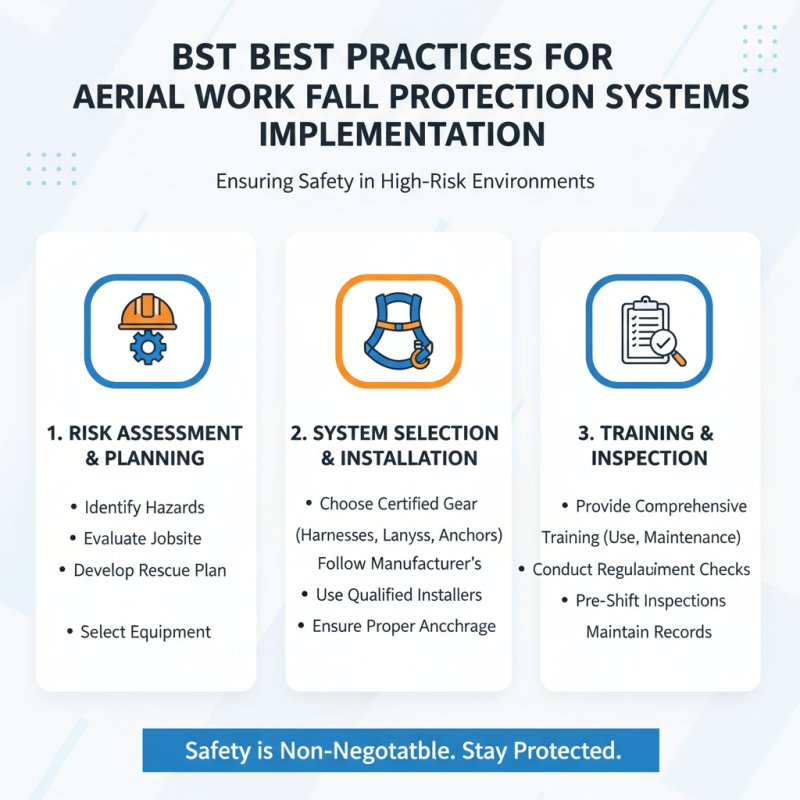
Best Practices for Aerial Work Fall Protection Systems Implementation
When it comes to implementing aerial work fall protection systems, understanding best practices is crucial. Aerial work environments can be inherently risky, making proper safety measures essential.
Start by assessing your work site thoroughly. Identify potential fall hazards specific to the area. Once hazards are recognized, create a fall protection plan tailored to the environment and specific tasks. It’s important to involve workers in this process. Their insights can highlight overlooked risks.
Tips: Ensure regular training for all employees. Use practical exercises to reinforce learning about fall protection systems. Consistent practice can build muscle memory for reacting in emergencies.
Another aspect is equipment inspection. Regular checks help prevent failures during use. A worn harness or damaged guardrails can lead to accidents. Encourage reporting of any defects. Sometimes, workers may hesitate to speak out. Cultivating an open culture is vital for safety.
Tips: Keep a simple log for equipment inspections. This practice enhances accountability. Regularly review findings with the team to foster communication about safety. Remember, a proactive approach can save lives.
Training and Education Requirements for Aerial Work Fall Protection
Aerial work can be risky. Fall protection is essential for safety. In recent reports from the National Institute for Occupational Safety and Health (NIOSH), falls account for over 30% of construction fatalities. Proper training is crucial in minimizing these risks.
Training requirements are often overlooked. Workers need to understand how to use fall protection equipment correctly. Yet, studies show that many workers lack adequate training. Only 50% of aerial work operators receive comprehensive training on fall hazards. This is alarming. A lack of knowledge can lead to serious injuries or fatalities.
Education programs should be updated regularly. They need to address changing regulations and technology. For example, OSHA mandates that aerial lift operators receive training before using equipment. Yet, compliance is inconsistent across the industry. Workers must engage in hands-on training. Real-life scenarios help reinforce learning. It's not just about ticking boxes; it's about ensuring safety on the job site.
Aerial Work Fall Protection Essentials



 Ms.Lily International Sales Director
 Join 3S Group