
Leave Your Message
Buying a Scaffolding Hoist for an international project requires more than comparing prices and lifting capacity. Buyers must examine real working conditions, supplier experience, technical documents, and after-sales support. A hoist rated for 1,000 kilograms may perform differently on a dusty site, in coastal air, or under frequent daily cycles. Small details matter.
This guide presents ten practical buying tips for global buyers. It covers rated load, lifting speed, platform dimensions, motor performance, emergency braking, limit switches, and control systems. It also considers installation training, spare parts, inspection records, packaging quality, and communication across time zones. Look for suppliers who can explain test procedures clearly and provide traceable documentation. Ask how the equipment performs after months of exposure to rain, dust, and vibration. Field experience matters.
Do not trust impressive brochures alone. Request photographs, operating videos, manuals, and references from comparable construction projects. Confirm that the Scaffolding Hoist suits local site conditions and applicable safety requirements. A reliable supplier should welcome technical questions rather than avoid them. Some buyers focus too heavily on the initial quotation. That can be costly.
No checklist is flawless. Project teams may overlook foundation conditions, operator training, or delivery delays. Recheck these assumptions before placing an order. A careful decision balances safety, productivity, maintenance access, and total ownership cost. The right hoist is not merely powerful. It should be predictable, serviceable, and supported throughout its working life.
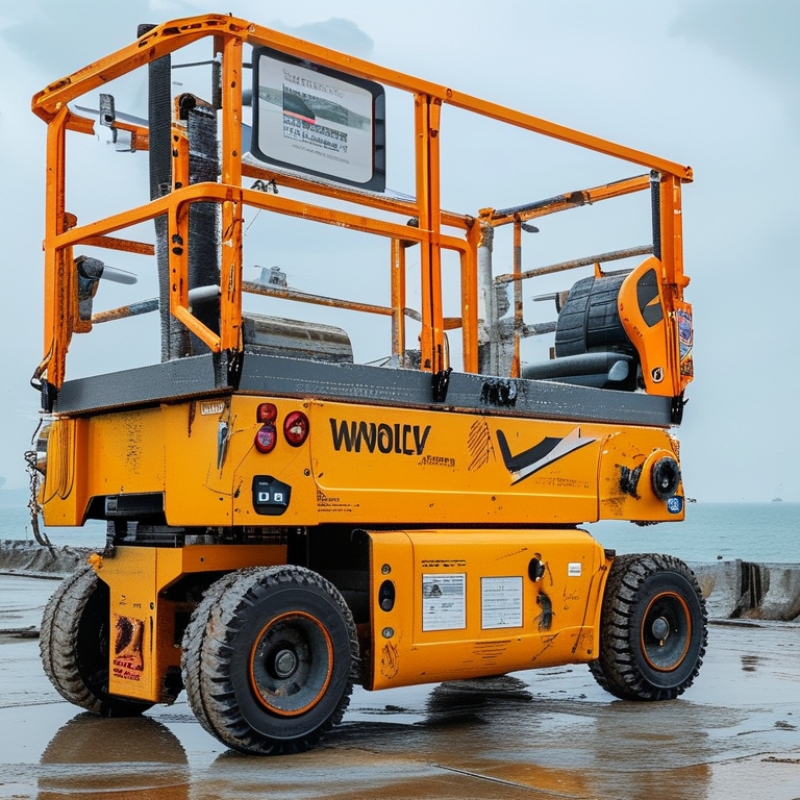
Before comparing prices, define the complete lifting requirement for your scaffold hoist. A hoist rated for 500 kg cannot automatically lift 500 kg safely in every setup. Record the platform, workers, tools, attachments, and materials. Measure it. Include the heaviest single lift and the normal working load. Add lifting height, required speed, daily cycles, and project duration. These details affect motor duty, brake selection, rope or chain choice, and cooling needs.
For scaffold operations, separate static weight from starting and stopping forces. A sudden start can increase stress on the scaffold and lifting mechanism. Use a documented safety margin, but do not guess it. The support points, tie-ins, landing gates, and power supply must match the selected capacity. A 300 kg load lifted 30 meters may require different duty performance from the same load lifted five meters. Capacity alone is incomplete. I have seen buyers specify maximum weight while overlooking repeated lifts in dusty or wet conditions. That mistake can cause overheating, brake wear, or slower production.
Ask suppliers for rated capacity, test records, duty classification, emergency stopping performance, and operating limits. Verify whether the stated capacity includes the platform and lifting attachments. Check voltage, phase, controls, and site electrical compatibility. An honest specification should state what the hoist cannot do. If the work plan changes, recalculate the load instead of stretching the original estimate.
| No. | Buying Dimension | Recommended Specification or Data Range | Practical Guidance for Global Buyers | Key Verification Documents |
|---|---|---|---|---|
| 1 | Define the hoist capacity | Rated load: 300–1,000 kg for common material-hoisting applications | Calculate the heaviest planned load, including packaging and lifting accessories. Select a rated capacity above the calculated working load without using the hoist beyond its stated limit. | Load chart, rated-capacity plate, test certificate, and operating manual |
| 2 | Confirm lifting height | Typical scaffold lifting height: 20–100 m; project-specific heights may be higher | Measure the full vertical travel from the loading point to the highest unloading point. Add suitable rope or chain length for anchoring, reeving, and safe positioning. | Maximum lifting-height specification and rope or chain-length schedule |
| 3 | Match lifting speed to workflow | Common working speed: approximately 8–20 m/min | Choose a moderate speed for controlled placement of scaffold tubes, boards, and tools. Higher speed can improve productivity but may require stronger load-control procedures. | Rated lifting-speed data, speed tolerance, and control-system description |
| 4 | Check duty cycle | Intermittent duty is common; verify operating time, starts per hour, and rest periods | Estimate lifting cycles per hour and total daily operating time. A hoist designed for occasional use may overheat or wear prematurely under continuous construction-site operation. | Duty classification, motor thermal rating, and recommended operating intervals |
| 5 | Verify power-supply compatibility | Typical industrial supplies include 220–240 V or 380–415 V, 50/60 Hz, single- or three-phase | Confirm the voltage, phase, frequency, plug type, breaker rating, and site generator capacity before ordering. Electrical requirements vary by country and project location. | Electrical nameplate, wiring diagram, current rating, and conformity documentation |
| 6 | Evaluate mounting and anchoring | Confirm support structure, mounting bracket, counterweight, and anchorage requirements | The scaffold or supporting structure must withstand the hoist loads, dynamic effects, and any rated side forces. Do not rely on scaffold components unless the installation method is specifically approved. | Installation drawings, support-load data, anchoring instructions, and structural assessment requirements |
| 7 | Inspect rope, chain, and load path | Steel wire rope or load chain must be matched to rated capacity, travel length, and reeving arrangement | Check rope or chain diameter, minimum breaking load, termination method, hook condition, and compatibility with sheaves or sprockets. Replace components that show deformation, corrosion, cracks, or excessive wear. | Rope or chain certificate, hook inspection criteria, and replacement limits |
| 8 | Prioritize safety controls | Include emergency stop, upper and lower limit protection, overload protection, brake, and guarded controls | Safety functions should prevent over-travel, uncontrolled descent, and lifting beyond rated capacity. Confirm whether the emergency stop is resettable and whether controls are suitable for the working environment. | Functional safety checklist, brake test procedure, and control-panel specifications |
| 9 | Check environmental suitability | Review temperature, rain exposure, dust, corrosion risk, and enclosure protection rating | Outdoor construction sites may require weather-resistant electrical enclosures and corrosion protection. Verify the permitted ambient-temperature range and whether operation in wet conditions is allowed. | Ingress-protection information, operating-temperature range, and maintenance requirements |
| 10 | Plan compliance, training, and service | Use equipment compliant with applicable local lifting regulations and provide operator training | Requirements differ by country and jurisdiction. Arrange pre-use inspections, periodic examinations, spare parts, technical support, and documented operator training before deployment. | Declaration of conformity, inspection records, training materials, warranty terms, and service schedule |




 Ms.Lily International Sales Director
 Join 3S Group