
Choosing the best Personnel Fall Protection supplier in China requires more than comparing prices or product photographs. The U.S. Bureau of Labor Statistics recorded 885 fatal work injuries from falls, slips, and trips in 2023. This figure comes from its Census of Fatal Occupational Injuries and reflects U.S. workplaces, not China. Still, it shows why dependable equipment and careful selection deserve attention.
A supplier’s quality process should be clear and verifiable. Ask for current test reports, product specifications, material traceability, and inspection records. Check how the company controls harness stitching, connectors, energy-absorbing lanyards, and product labeling. Small details matter. A neat sample is useful, but it cannot prove consistent production. Buyers should confirm that documents match the exact model and configuration being purchased.
For international buyers, the strongest partner is not automatically the largest factory. Look for relevant manufacturing experience, responsive technical support, transparent lead times, and a process for handling defects. Request samples and review them against documented requirements before placing a large order. Where possible, use qualified third-party testing for independent evidence. No supplier is perfect. Even a promising factory may have gaps in communication or documentation. A careful review should identify those limits, rather than hide them. This guide explores practical ways to assess Chinese suppliers and make a more informed sourcing decision.
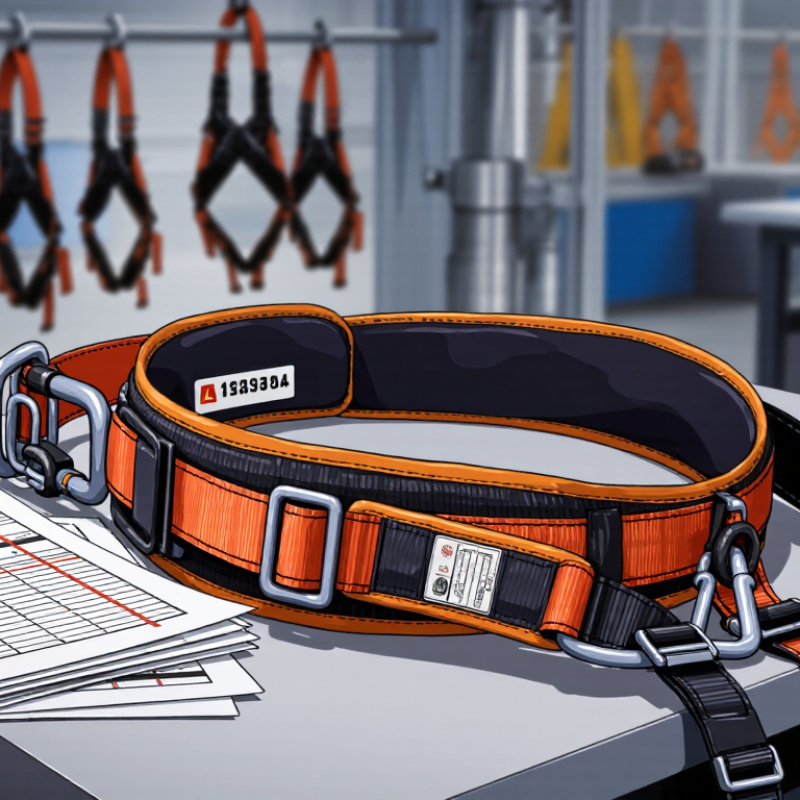
Personnel fall protection systems combine equipment, site planning, and worker training. Their purpose is to prevent a fall or reduce its consequences. A complete setup may include a full-body harness, connectors, an anchor point, and a lifeline. Each part must work with the others. A mismatch can create risk, even when every component looks sturdy.
Different tasks need different controls. Guardrails can protect several workers along an exposed edge. Restraint systems limit movement so a worker cannot reach that edge. Fall-arrest systems stop a fall after it begins, using compatible anchors and connecting equipment. Nets may suit some work areas, but they need careful positioning and checks. Fit matters. Harness straps should sit snugly, without twisting or restricting movement. A small adjustment can change comfort and function.
The system also needs inspection, clear use instructions, and a workable rescue plan. Workers should know how to check webbing, buckles, and connectors before use. Any damaged or questionable item needs attention, not guesswork. A supplier should explain component compatibility, material records, and maintenance guidance—not just provide a product list. Even a technically sound setup can be awkward on a real job site; that detail deserves honest review before purchase.

When evaluating a personnel fall protection supplier in China, look beyond a certificate displayed on a website. Ask for current documents that identify the product, applicable standard, issuing body, test scope, and expiry date. The certificate should match the exact harness, lanyard, or connector you plan to buy. Details matter. A document covering one product family may not cover every size or configuration.
Tips: Request full test reports and check that sample labels match the documents. Confirm how the supplier tracks production batches and handles changes to materials or design. Ask who performs inspections, and how often. If answers stay vague, pause. A neat certificate folder is useful, but it cannot show how a product performs after repeated use.
Also assess practical controls. Request clear instructions for inspection, fitting, storage, and retirement, preferably with photographs or diagrams. Check whether components are designed to work together, and ask about user training and support after delivery. Requirements differ by destination and worksite, so verify relevant standards with a qualified safety professional. A factory visit or independent product inspection can add useful evidence. Still, one visit cannot prove every production run is consistent; I would treat it as one piece of the evaluation, not the final answer.
When comparing a personnel fall protection supplier in China, look beyond a catalogue photo. Check the range: full-body harnesses, shock-absorbing lanyards, vertical lifelines, connectors, and rescue equipment. Fit matters. Ask whether harness sizes suit different users and whether connection points match the work setup. Request product specifications, material details, test records, and certificates with a clear scope. Verify that documents apply to the exact model, not just a similar product. A polished certificate alone tells little about quality control.
Service deserves the same scrutiny. Ask how samples are evaluated, how production batches are traced, and what happens when an inspection finds a defect. Small details count. Clear answers on lead times, packaging, replacement parts, and after-sales support can prevent delays at a job site. If customization is offered, confirm which changes affect testing or compatibility. Ask for inspection guidance and practical user materials, not just a sales sheet. I would not treat a quick reply as proof of dependable support; request specific examples and allow time to verify them. Some suppliers may have strong products but uneven documentation, so compare the evidence carefully.
Use these OSHA construction requirements as reference points when comparing harnesses, lanyards, positioning systems, and supplier support. The bars show different regulatory limits, not a ranking of products or suppliers.
Ask suppliers for applicable product certifications, clear compatibility guidance for complete systems, inspection and replacement instructions, and user training. Confirm that products meet the regulations and standards applicable to your worksite and jurisdiction.
Reference: OSHA 29 CFR 1926.502(d)(16)(ii) and (iv), and 1926.502(e)(2)(ii). Values shown are regulatory limits in U.S. construction rules.
When assessing a Chinese personnel fall protection supplier, look beyond a polished catalogue. Ask how harnesses, lanyards, and connectors are inspected at each production stage. Request product-specific test reports, batch traceability records, and details about how testing equipment is calibrated. Check that documents match the exact model and materials being quoted.
Inspect a representative sample closely. Look for even stitching, clearly readable labels, consistent webbing, and connectors that move and lock smoothly. Ask to see how incoming materials are checked and how failed items are recorded. A factory visit or independent inspection can reveal gaps that a video call may miss. No checklist catches everything.
Reliability also shows in ordinary communication. Send a technical question and note whether the reply is specific, timely, and supported by evidence. Discuss lead times, production capacity, replacement parts, and how quality complaints are investigated. A low price may be attractive, but unclear records or changing specifications deserve careful follow-up. I would not treat one successful sample as proof of consistent production; request checks across more than one batch when practical.
| Assessment Dimension | Weight | What to Verify | Credible Evidence to Request | Warning Signs | Score (0–5) |
|---|---|---|---|---|---|
| Applicable standards and product conformity | 15% | Confirm the exact standard and edition applicable to each product type and destination market. For China, check whether the product falls within the scope of GB 6095-2021. For export products, verify the relevant requirements for harnesses, energy absorbers, connectors, or retractable devices. | Product-specific test reports; certificates where required; model, configuration, and standard details that match the goods being quoted. Verify reports directly with the issuing laboratory or certification body. | A generic certificate is presented as proof for every product, models do not match, or the supplier will not identify the applicable standard. | — |
| Independent testing and traceability | 15% | Check that test results are relevant to the exact model, materials, and construction. Confirm the laboratory’s identity, report number, test date, and scope; accreditation such as ISO/IEC 17025 can help assess laboratory competence. | Complete, unaltered reports and a clear method for confirming their authenticity with the laboratory or issuing body. | Only cropped screenshots are supplied, report details cannot be verified, or a report for a different model is used. | — |
| Quality management and production controls | 15% | Assess incoming-material checks, in-process inspections, final inspection, nonconformance handling, and corrective actions. Treat ISO 9001 certification as supporting evidence of a management system, not as product certification. | Current certificate with verifiable scope; inspection procedures; sample inspection records; corrective-action examples; production and lot-control records. | Inspection records are unavailable, production checks are described only verbally, or certification scope does not cover the relevant operation. | — |
| Materials and component control | 10% | Verify specifications and supplier controls for webbing, stitching thread, buckles, connectors, and other safety-critical components. Check how substitutions and design changes are approved. | Material specifications, incoming inspection records, component traceability, and documented change-control procedures. | Materials are substituted without approval, component origins cannot be traced, or specifications are inconsistent across documents. | — |
| Product identification and lot traceability | 10% | Check that products and packaging carry required identification and instructions, and that production lots can be linked to relevant material and inspection records. | Photos or samples of labels and instructions; a documented lot-number system; a demonstration of how a product lot can be traced through production records. | Labels are missing key product details, lot numbers are absent or inconsistent, or records cannot identify affected production batches. | — |
| Design, instructions, and user support | 10% | Review whether instructions clearly cover intended use, fitting, inspection, maintenance, limitations, and retirement criteria, consistent with the applicable product requirements. | Current instruction manuals, product drawings or specifications, revision history, and a process for communicating safety-related changes. | Instructions are vague or inconsistent with the product, or the supplier cannot explain product limitations and inspection requirements. | — |
| Delivery performance and capacity | 10% | Compare quoted lead times with documented performance for similar orders. Confirm production capacity, critical component availability, peak-season planning, and how delays are communicated. | Redacted order and shipment records, a realistic production schedule, capacity information, and written procedures for delay escalation. | Lead times are guaranteed without capacity evidence, delivery records are unavailable, or material constraints are disclosed only after an order is placed. | — |
| Order, change, and complaint management | 5% | Assess how the supplier confirms specifications, controls revisions, responds to complaints, investigates defects, and manages corrective actions. | Order-confirmation templates, change-control records, complaint-response examples, and documented corrective-action processes. | Specification changes are handled informally, responsibilities are unclear, or complaints receive no documented investigation or follow-up. | — |
| Business and supply-chain due diligence | 5% | Confirm the contracting entity and actual manufacturing location. Establish whether production is in-house or subcontracted, and identify who controls quality at each site. | Business registration details, factory address, disclosed subcontracting arrangements, and an on-site or independent factory-audit report where appropriate. | The contracting party, factory, and stated production location do not align, or subcontracting is undisclosed. | — |
| Samples and pre-shipment inspection | 5% | Compare production samples with approved specifications and agree on inspection criteria before shipment. Sampling inspection does not replace required product testing or certification. | Signed sample approval, agreed inspection checklist, and pre-shipment inspection records tied to the order and production lot. | Samples differ from the final production specification, inspection criteria are undefined, or inspection records cannot be linked to the shipment. | — |
| Total weighted assessment | 100% | Score each dimension from 0 to 5. Weighted points = dimension weight × score ÷ 5. Verify critical safety claims before purchase; a high overall score does not replace required testing or compliance checks. | — / 100 | ||
Scoring guide: 0 = no evidence; 1 = major gaps; 2 = partial or weak evidence; 3 = adequate, verifiable evidence; 4 = strong documented controls; 5 = consistently verified performance. Requirements depend on product type, intended use, and destination market.
Choosing a personnel fall protection supplier starts with the worksite, not a catalogue. Describe actual tasks: roof edges, steel frames, lifts, or maintenance platforms. Share anchor locations, clearance below workers, weather exposure, and how often equipment will be used. A harness that looks suitable in a photograph may restrict movement or conflict with other gear. Fit matters.
Ask suppliers to explain product limits in plain language. Request current technical sheets, inspection guidance, replacement-part availability, and evidence that products meet standards applicable to your region and job. Check whether harnesses, connectors, lanyards, and anchors work together as a system. Ask about fitting support and worker training, too. A low price helps little if crews cannot adjust equipment correctly. Lead times matter during shutdowns.
Tips: Bring a site sketch and task list to supplier discussions. Arrange a sample fit check with the people who will wear the gear. Confirm who can answer inspection questions after delivery. Keep notes; small details get missed. Revisit the choice after a real work shift. No checklist catches every snag, heat issue, or awkward reach.