Leave Your Message

10 Best Thermal Power Chimney Elevators to Buy?

Thermal power stations remain major infrastructure assets, despite rapid growth in renewable generation. The International Energy Agency reported that coal-fired electricity generation reached a record level in 2023. Global Energy Monitor’s January 2024 Global Coal Plant Tracker also identified more than 2,000 gigawatts of operating coal capacity worldwide. These figures explain why reliable vertical access remains important inside tall, hot, and heavily maintained chimney structures.

This guide examines 10 Best Thermal Power Chimney Elevators to Buy? The phrase “best” needs caution. A chimney elevator is not selected by lifting speed alone. Engineers must review travel height, rated load, cage dimensions, emergency braking, corrosion resistance, wind exposure, and evacuation arrangements. EN 12159 provides a relevant safety framework for builders’ hoists and transport platforms. Site-specific risk assessments remain essential. A compliant product may still be unsuitable for a coastal plant, a narrow flue, or a chimney exceeding 200 metres.

The selected Thermal Power Chimneys Elevator systems are compared through practical criteria. These include installation access, maintenance records, control reliability, spare-parts support, and inspection documentation. Operators should request test certificates and verify compatibility with local regulations. Product brochures often emphasize speed. They rarely show downtime figures or rescue performance. That gap deserves attention. This review uses available manufacturer information, industry standards, and energy-sector reports, but public elevator performance data is limited. Therefore, the ranking should be treated as a technical starting point, not a universal verdict. A careful buyer will measure the chimney first, inspect the service environment, and calculate total ownership costs before choosing equipment.
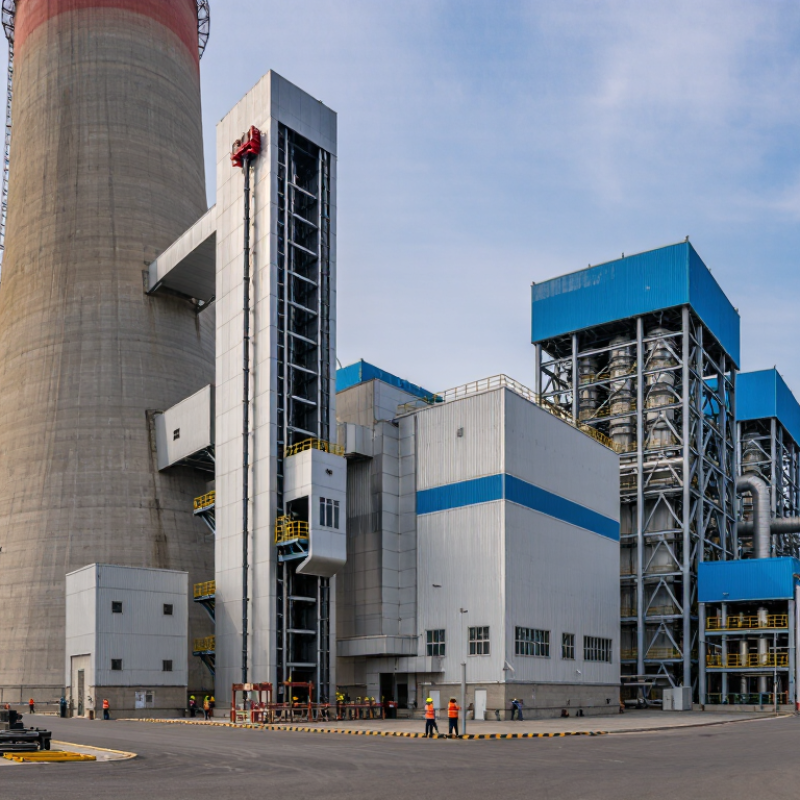
10 Best Thermal Power Chimney Elevators to Buy?

What Are Thermal Power Chimney Elevators and How Do They Work?

Thermal power chimney elevators are vertical transport systems designed for tall exhaust stacks. They carry technicians, tools, and inspection equipment between ground level and working platforms. They are not ordinary lifts. The chimney’s height, heat, dust, vibration, and wind require specialized engineering.

Most systems use a guided cage, traction or hoisting equipment, steel guide rails, and several safety devices. An electric motor moves the cage along the rails. Brakes hold it during stops, while limit switches prevent travel beyond approved points. Door interlocks reduce the risk of movement with an open entrance. Emergency lowering systems may help occupants leave safely during a power failure. In practice, performance depends on correct installation and regular testing. A strong design can still fail if maintenance records are poor.

Tips: Check the rated load, travel speed, cage dimensions, emergency communication, and inspection schedule before buying. Ask for clear evidence of compliance with applicable industrial elevator standards. Measure the chimney interior carefully; small alignment errors can create uncomfortable movement or extra rail wear. Consider corrosion protection, heat-resistant components, and reliable access at every platform. A “perfect” solution is rare. Site conditions change, and this needs honest review. Operators should receive practical training, not only a short demonstration. Be cautious with low prices, because unavailable spare parts can stop critical maintenance work.

10 Best Thermal Power Chimney Elevators to Buy?

What Are Thermal Power Chimney Elevators and How Do They Work?

Thermal power chimney elevators are vertical transport systems used to move personnel, tools, and maintenance equipment inside or alongside tall industrial chimneys. This chart compares ideal travel times for a fixed 200-meter vertical journey at different rated speeds. Travel time is calculated as height divided by speed; actual operation may take longer because of acceleration, door cycles, safety checks, and intermediate stops.

Key Features to Compare Before Buying a Chimney Elevator

10 Best Thermal Power Chimney Elevators to Buy?

Key Features to Compare Before Buying a Chimney Elevator

A thermal power chimney elevator must handle height, heat, dust, and changing weather. Compare rated load capacity with the heaviest planned tools and workers, not only the cabin weight. Check the lifting height, travel speed, stopping accuracy, and available platform space. A smooth stop matters when someone carries inspection equipment. In my experience, unclear control responses create more risk than moderate operating speed. That detail is easy to overlook.

Tips: Ask for a complete load chart, maintenance schedule, and emergency descent procedure. Inspect the cabin doors, interlocks, limit switches, and overspeed protection. Request practical noise and vibration data under normal operating conditions. Photos are useful, but an on-site inspection is better.

The elevator structure should resist corrosion from moisture, chemicals, and chimney gases. Look for sealed electrical parts, durable guide rails, and accessible service points. Confirm whether the system supports manual rescue during power loss. Review installation tolerances and the strength of the chimney attachments with a qualified engineer. Compliance documents should match the actual configuration, not a similar model.

I would also examine spare-part availability and technician response times. A lower purchase price can become expensive after one neglected fault. No option is perfect. Check the details twice.

Top Safety and Compliance Standards for Chimney Elevators

Choosing among the 10 best thermal power chimney elevators requires more than comparing lifting speed or cabin size. Safety compliance should guide every purchase decision. The elevator needs tested brakes, an overspeed governor, emergency stopping controls, and secure landing gates. Load ratings must match workers, tools, and changing wind conditions. Every access point should prevent accidental opening during movement. Local regulations may differ, so buyers should verify requirements with certified inspectors and site authorities.

Tips: Ask for inspection records, load-test reports, maintenance logs, and operator training evidence. Check whether emergency lowering works during a power failure. Inspect cables, anchor points, guide rails, and electrical enclosures before each shift. A clean control panel matters, especially where dust and moisture enter the chimney.

Reliable equipment also needs practical installation planning. Measure shaft clearance carefully, including platforms, brackets, and rescue access. Confirm that the structure can support dynamic loads, not only the elevator’s static weight. Workers should use approved fall protection when entering exposed areas. Clear communication systems are essential above noisy turbine halls. A checklist may look complete yet miss a damaged anchor bolt. That uncomfortable possibility deserves attention. Competent technicians should document defects, isolate unsafe equipment, and approve operation only after corrective work. Safety performance depends on disciplined daily use, not paperwork alone.

10 Best Thermal Power Chimney Elevators to Buy? – Top Safety and Compliance Standards for Chimney Elevators
Option Elevator Configuration Typical Chimney Application Indicative Rated Load Typical Travel Speed Drive and Power Arrangement Primary Safety Features Relevant Standards and Compliance References Best-Fit Selection Criteria
1 Guided personnel lift with enclosed cabin Frequent vertical access inside large reinforced-concrete or steel flue-gas stacks Approximately 250–500 kg, subject to engineering design Approximately 0.3–1.0 m/s Electric geared traction or drum drive with fixed guide rails Overspeed governor, mechanical safety gear, emergency stop, door interlocks, upper and lower limit switches, emergency lighting, and manual rescue provision EN 81-20 and EN 81-50 where applicable; local lift regulations; ISO 12100 risk assessment; electrical installation requirements applicable to the site Best for high-frequency personnel movement and controlled access in a protected shaft
2 Guided service lift with partial enclosure Maintenance access to sampling platforms, inspection floors, and internal stack equipment Approximately 150–300 kg Approximately 0.2–0.6 m/s Electric winch or rack-and-pinion drive with rigid guides Rated-load limiter, overspeed protection, fail-safe brake, interlocked landing gates, anti-drop device, travel-limit switches, and emergency lowering EN 81-20 or relevant national lift rules for personnel lifts; EN 81-50 for verification and testing where applicable; ISO 13849-1 for safety-related control systems Best when maintenance tools and instruments must travel with technicians
3 Rack-and-pinion chimney access elevator Tall stacks with limited machine-room space and demanding outdoor exposure Approximately 300–800 kg, depending on car and guide design Approximately 0.3–1.0 m/s Electric motor and gearbox driving a pinion on a fixed rack Dual braking arrangement, overspeed monitoring, anti-rollback protection, gate interlocks, emergency stop, obstruction protection, and wind-related operating limits Applicable machinery and lift legislation; ISO 12100; ISO 13849-1; EN 60204-1 for electrical equipment of machines; site-specific structural and electrical codes Best for exposed installations where positive mechanical engagement is preferred
4 Wire-rope suspended personnel platform Temporary or occasional inspection of internal and external chimney surfaces Typically 120–300 kg, including occupants and equipment Approximately 0.05–0.25 m/s Suspension hoist with independent secondary safety rope Overspeed safety device, secondary rope, emergency stop, overload protection, rope-end protection, platform guardrails, harness anchorage, and controlled descent EN 1808 for suspended access equipment; applicable national work-at-height regulations; ISO 16368 for suspended access equipment where applicable Best for inspection work where permanent guide rails are impractical
5 External mast-climbing chimney elevator Construction, refurbishment, lining replacement, and major stack repair projects Approximately 500–1,500 kg, depending on mast and platform configuration Approximately 0.2–0.6 m/s Rack-and-pinion drive mounted on a modular external mast Overload limiter, overspeed brake, mast section locking, landing-gate interlocks, emergency lowering, wind-speed monitoring, and anchorage verification EN 12159 for builders’ hoists for persons and materials; EN 12158 for material hoists where relevant; applicable temporary-works and construction-site regulations Best for temporary heavy-duty access during construction or rehabilitation
6 Explosion-conscious low-spark service lift Chimney areas connected to fuel-handling, dust-producing, or potentially explosive process zones Approximately 150–500 kg Approximately 0.2–0.6 m/s Enclosed electric drive with equipment selected for the classified zone Bonding and grounding, controlled surface temperature, protected electrical enclosures, interlocked doors, emergency stop, overspeed protection, and documented zoning controls ATEX Directive 2014/34/EU for equipment within applicable European explosive atmospheres; IEC 60079 series; NFPA 70 and NFPA 497 where applicable; site hazardous-area classification is mandatory Best where combustible dust or flammable gas classification affects equipment selection
7 Corrosion-resistant stainless-steel guided lift Wet flue-gas desulfurization zones, scrubber outlets, and acidic condensate environments Approximately 200–500 kg Approximately 0.2–0.8 m/s Guided electric traction or rack drive with corrosion-protected components Enclosed controls, drainage, anti-corrosion fasteners, emergency stop, door interlocks, mechanical brake, overspeed protection, and inspection access Applicable lift or machinery regulations; EN 81-20 or EN 12159 according to the equipment type; IEC 60529 ingress-protection classification; plant corrosion-control specifications Best for chemically aggressive, humid, or condensate-prone chimney interiors
8 Low-clearance compact maintenance lift Existing stacks with restricted platform dimensions or limited overhead clearance Approximately 100–250 kg Approximately 0.15–0.5 m/s Compact winch, drum, or rack drive with reduced-size cabin Fail-safe brake, overspeed protection, emergency hand lowering, interlocked access doors, anti-crush protection, and load monitoring ISO 12100 risk assessment; ISO 13849-1 for safety controls; applicable national machinery, lift, and work-at-height requirements Best when the existing chimney structure cannot accommodate a full-size elevator
9 Dual-use personnel-and-material lift Large maintenance programs requiring transport of workers, tools, filters, and repair parts Approximately 500–1,000 kg, subject to separate personnel and material ratings Approximately 0.2–0.8 m/s Electric rack-and-pinion or traction system with selectable operating modes Separate rated modes, load cell, door and gate interlocks, overspeed brake, emergency stop, two-way communication, and clearly marked load limits EN 12159 when configured as a builders’ hoist; applicable lift regulations for permanent personnel service; ISO 12100; ISO 13849-1; local inspection requirements Best for projects that need both personnel access and controlled material handling
10 Emergency-rescue and inspection lift Critical infrastructure requiring reliable access during outages or emergency response Approximately 250–500 kg Approximately 0.2–0.8 m/s Primary electric drive with independent emergency lowering or backup power Backup power, emergency lighting, two-way communication, manual rescue access, overspeed protection, fire-resistant wiring where specified, and periodic rescue drills Applicable lift and fire-safety regulations; EN 81-20 and EN 81-73 where relevant; IEC 60364 electrical installation requirements; local emergency-planning and inspection rules Best for plants where chimney access must remain available during power interruptions
Important selection note: Final capacity, speed, travel height, guide-rail arrangement, wind limits, corrosion protection, hazardous-area classification, emergency systems, and conformity assessment must be verified by a qualified engineer against the chimney structure, local regulations, and the applicable equipment standard before purchase or installation.

10 Best Thermal Power Chimney Elevators for Different Applications

10 Best Thermal Power Chimney Elevators for Different Applications

The best chimney elevator depends on height, heat, dust, and maintenance access. For routine inspection, choose a guided traction elevator with a compact cage. Tall chimneys often need dual-rope lifting for steadier travel and backup support. Corrosion-resistant cabins suit wet flue-gas areas. Heat-shielded models serve hotter inspection zones. Reinforced platform lifts carry tools and replacement parts safely. Narrow service elevators fit older chimneys with limited internal space. High-cycle units support plants with frequent maintenance shifts. Remote-monitoring controls record trips, faults, and door status. Independently assessed rescue systems support emergency planning. These ten choices suit different applications, not identical purchasing needs.

Tips: Measure the chimney interior before requesting quotations. Confirm temperature, travel height, rated load, duty cycle, and landing spacing. Ask for brake tests, overspeed protection, interlocks, emergency lowering, and inspection records. Verify compliance with local regulations through a qualified engineer. Do not trust a brochure alone. Site conditions often differ. A stainless finish may still fail when acid condensation is ignored. No option is perfect. Inspect access routes, ventilation, lighting, and communication equipment during a real site visit. Purchase decisions should include maintenance training, spare-part availability, and documented service intervals.

How to Select, Install, and Maintain the Right Chimney Elevator

Selecting the right thermal power chimney elevator starts with the chimney’s real working conditions. Measure travel height, platform access points, rated load, wind exposure, and operating temperature. Corrosive gases and moisture can damage exposed components quickly. Choose a system with suitable materials, protective finishes, reliable brakes, guarded doors, and emergency lowering. Ask for documented load tests, inspection records, and service support. A low purchase price may become expensive after repeated repairs.

Installation requires a site survey and a qualified engineering team. Check the chimney shell, brackets, guide rails, power supply, and landing clearances before lifting equipment into position. Technicians should follow approved drawings and isolate nearby machinery during installation. Test every interlock, limit switch, brake, alarm, and emergency stop under controlled conditions. Record test results carefully. Small alignment errors can create vibration, noise, or uneven wear. I have seen maintenance plans fail because access conditions were assumed, not measured.

Tips: Keep a clear maintenance log with dates, findings, and replaced parts. Inspect ropes, guides, doors, bolts, sensors, and electrical cabinets at scheduled intervals. Clean dust and chemical deposits before they hide cracks or corrosion. Listen for unusual sounds. Do not ignore them. Recheck anchor points after severe weather or chimney repairs. Training should include rescue procedures, safe loading, and communication between the operator and ground crew. Review the system annually, even when daily operation appears normal.