Leave Your Message

What Is the Best Hoist for LNG Tanks?

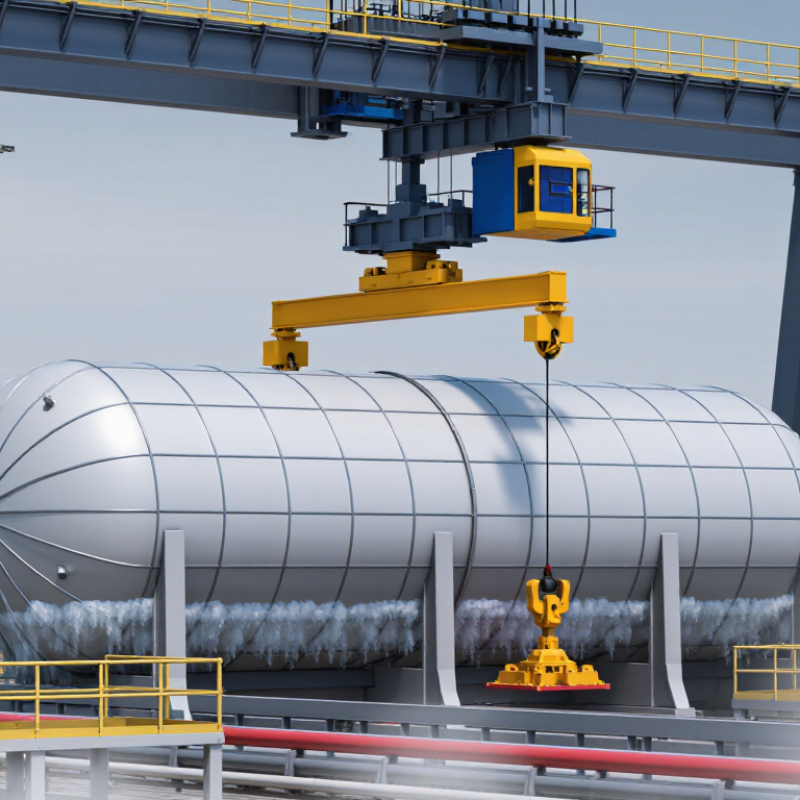
Selecting the best Lng Tanks Hoist requires more than comparing lifting capacity or purchase price. LNG facilities operate around cryogenic temperatures, flammable vapors, restricted access, and demanding maintenance schedules. The right hoist must lift reliably while supporting controlled, traceable work.

The International Gas Union’s World LNG Report 2024 recorded global LNG trade at approximately 404 million tonnes in 2023. This expanding network increases pressure on terminals, storage sites, and maintenance teams. GIIGNL’s 2024 Annual Report also highlights continued investment in LNG infrastructure and operational reliability. Every lifting device matters.

A suitable hoist should match the tank’s working load, lift height, duty cycle, and installation environment. Stainless or protected components can reduce corrosion around humid terminals. Low-temperature-rated seals and lubricants deserve careful review. Emergency stops, overload protection, limit switches, and remote operation can improve worker separation from hazardous areas. Small details matter.

ASME B30.16 provides widely recognized guidance for overhead hoists, while site-specific engineering must address hazardous-area classification and applicable electrical requirements. Certification alone does not guarantee suitability. The hoist, trolley, controls, anchor points, and supporting structure must work as one engineered system.

There is no universal winner. A compact electric hoist may suit routine valve maintenance, while a heavier-duty system may serve repeated pump or vaporizer work. That distinction is often missed. Buyers should examine inspection records, spare-parts access, operator training, and manufacturer support. A cheaper hoist can become expensive when downtime, corrosion, or difficult servicing appears later. Careful selection creates safer lifting, steadier maintenance, and more dependable LNG tank operations.
What Is the Best Hoist for LNG Tanks?

LNG Tank Hoist Fundamentals: −162°C Service and Safe Working Load

Selecting a hoist for an LNG tank starts with the environment, not lifting capacity alone. At −162°C, ordinary lubricants stiffen, seals lose flexibility, and moisture can freeze around moving parts. A suitable hoist needs cryogenic-rated materials, compatible lubrication, and protection against thermal contraction. Stainless steel components may help, but material choice must follow the complete temperature range and load path. That detail is often underestimated.

Safe working load, or SWL, must cover the heaviest planned lift, rigging hardware, impact effects, and controlled operating margins. Never treat the nameplate rating as the actual process limit. The supporting beam, trolley, shackles, welds, and tank structure must carry the same verified load.

Engineers should review static and dynamic forces, especially when a suspended valve or pump can swing. A load test at ambient temperature is useful, but it does not reproduce cryogenic behavior. Cold-soak testing, where required by the design, provides stronger evidence. Records matter.

For field selection, I would check emergency stops, brake holding, limit switches, corrosion resistance, and inspection access. Controls should keep operators away from cold vapor and possible splash zones. Ventilation and gas detection belong in the lifting plan, not as afterthoughts. The best hoist must match the tank’s geometry, duty cycle, and verified SWL. A perfect choice is rare. I would still question any specification that ignores condensation, thermal shock, or maintenance after repeated cold exposure. Final acceptance should come from a qualified lifting engineer and documented inspection.
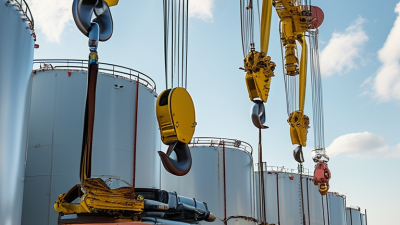

Capacity Selection: SWL, Lift Height, and Dynamic Load Requirements

What Is the Best Hoist for LNG Tanks?

Capacity Selection: SWL, Lift Height, and Dynamic Load Requirements

Selecting a hoist for LNG tanks begins with the safe working load, or SWL. Do not match SWL to the tank’s empty weight alone. Include lifting beams, shackles, insulation frames, trapped liquid, and possible ice accumulation. A practical load schedule should show every component and its uncertainty. According to the IGU World LNG Report 2024, global LNG trade reached about 404 million tonnes in 2023. More terminals mean more lifting work, but each site still needs individual calculations. A larger hoist is not automatically safer. It may increase headroom demands and structural reactions.

Lift height also controls the choice. Measure from the hook’s parked position to the tank’s highest installation point. Then allow room for sling angles, beam deflection, and operator visibility. Dynamic loads deserve careful attention. Starting, stopping, trolley travel, wind, and uneven sling tension can raise hook forces above static weight. EN 13001-2 addresses load combinations and dynamic effects, while ASME BTH-1 supports design classification for below-the-hook equipment. These standards guide engineering, not guesswork. A neat spreadsheet can still be wrong.

Tips: Request the hoist supplier’s rated load chart, duty classification, braking data, and inspection history. Confirm the supporting structure can resist vertical and horizontal reactions. Recheck the calculation when the lifting method changes. That detail is often missed. A conservative factor may be sensible, but applying one blindly can hide poor rigging geometry and create a false sense of security.

Hoist Types Compared: Electric, Pneumatic, and Hydraulic Designs

What Is the Best Hoist for LNG Tanks?

In LNG tank service, the best hoist depends on load, duty cycle, location, and maintenance access. Cold changes everything.

Electric hoists provide accurate positioning and efficient lifting for regular maintenance tasks. Variable-speed controls can reduce load swing near valves, ladders, and pipe supports. However, motors, brakes, and control panels need suitable protection for the classified area. Moisture, condensation, and low temperatures can also shorten component life.

Pneumatic hoists are often selected where electrical equipment creates additional installation concerns. They tolerate frequent starts and can offer smooth lifting with simple controls. A clean, dry air supply is essential. Water in the air line may freeze, causing slow movement or sudden stoppage. That small detail is easy to underestimate. Noise can also become uncomfortable during long maintenance shifts.

Hydraulic hoists deliver high pulling force and controlled motion, especially for heavier equipment. Their power units can remain away from the tank, reducing congestion around the work zone. Yet hydraulic oil viscosity changes in cold conditions, and hose damage may create difficult leaks. Inspection becomes critical.

In practice, engineers should compare rated capacity, braking performance, emergency lowering, corrosion resistance, and service intervals. Pneumatic designs may suit frequent use in sensitive areas, while electric units often win on precision. Hydraulic systems remain valuable for demanding loads. No design is perfect. Field conditions should decide.

Hazardous-Area Compliance: ATEX, IECEx, and ASME B30.16 Standards

What Is the Best Hoist for LNG Tanks?

In LNG facilities, the best hoist begins with hazardous-area classification. The surrounding zone, gas group, and temperature class must match the hoist certificate. ATEX approval supports equipment use within applicable European hazardous locations. IECEx certification provides an internationally recognized conformity route. Neither should be treated as a decorative label.

Look closely at the certificate. It should identify the protection method, equipment category, ambient temperature range, and permitted gas atmosphere. Cryogenic areas can challenge seals, lubricants, cables, and brittle materials. A hoist may meet electrical requirements yet perform poorly in extreme cold. That gap deserves attention. Grounding, bonding, enclosure integrity, and pendant design also require verification. Reduced sparking features cannot replace certified explosion protection.

ASME B30.16 addresses overhead, underhung, and stationary hoist safety. It guides design, installation, operation, inspection, testing, and maintenance. However, it does not provide ATEX or IECEx hazardous-area certification. Both safety layers are necessary. Select a rated capacity above the routine load, while considering shock loading and lifting accessories. Keep inspection records specific to each hoist. Check brakes, chains, hooks, limit devices, and corrosion near tank structures. A certificate alone is not enough. No checklist is flawless. Field conditions change, and assumptions sometimes survive longer than they should.

Best-Hoist Criteria: IP66 Protection, M3–M8 Duty Classes, and Maintenance

LNG terminals need hoists that tolerate moisture, dust, cold surfaces, and repeated maintenance lifts. The best choice begins with IP66 protection under IEC 60529:2013. This rating means dust-tight construction and resistance to powerful water jets, not immersion. That distinction matters near washdown areas and condensation-prone tank roofs. Seals, cable glands, pendant controls, and brake enclosures deserve inspection evidence, not marketing claims. Ask for test records and confirm the enclosure remains protected after installation.

Duty class must match actual use. ISO 4301-1:2016 and FEM 9.511 classify mechanisms from M3 through M8 by operating conditions, load spectrum, and service intensity. M3 may suit occasional access work, while M7 or M8 can fit frequent, demanding handling. Do not select by rated capacity alone. A five-ton hoist used twice weekly may need a different class than a one-ton hoist cycling hourly. Record lifts per shift, average load, travel distance, and starts per hour. Those figures expose optimistic assumptions.

The International Gas Union’s World LNG Report 2024 recorded about 404 million tonnes of LNG traded in 2023. Growing throughput increases the cost of delayed maintenance. Specify accessible grease points, replaceable seals, visible rope inspection areas, and manual release procedures. Where flammable gas may occur, electrical protection must match site hazardous-area requirements; IP66 alone is insufficient. Cold-start checks, brake response, limit-switch function, and insulation testing should be documented before critical work. One detail is often missed. Corrosion hidden behind a clean enclosure can still surprise a team.