Choosing the right Electric Wire Rope Hoist in 2026 is not merely a catalog exercise. It is a decision about lifting safety, uptime, and long-term cost. A small warehouse may need a compact hoist for occasional pallet handling. A fabrication shop may require frequent lifts, precise travel, and a higher duty rating. The difference is significant. This guide explains how to compare lifting capacity, lift height, rope construction, reeving, motor performance, braking systems, controls, and maintenance access. It also considers installation conditions, including dust, moisture, temperature, and available power. Real applications rarely match brochure examples. That is where careful judgment matters.
Reliable selection begins with the load, not the advertised maximum. Record the typical load, heaviest load, lifting frequency, travel distance, and required speed. Leave a sensible safety margin. Never treat this guide as a substitute for an engineer’s review. Check rated capacity, duty classification, emergency stopping, limit switches, overload protection, and supporting structure with qualified professionals. Ask suppliers for test records, manuals, spare-parts availability, warranty terms, and clear technical data. A lower purchase price can become expensive when downtime, difficult servicing, or unsuitable controls appear later. I have seen buyers focus on motor power and overlook headroom or pendant reach. That mistake is easy to make. It is also avoidable. The best choice balances verified performance, operator needs, site conditions, and documented after-sales support. Some recommendations remain uncertain without a site survey. That limitation should be stated honestly. Use this guide to ask better questions, challenge vague claims, and choose equipment you can inspect, maintain, and trust.
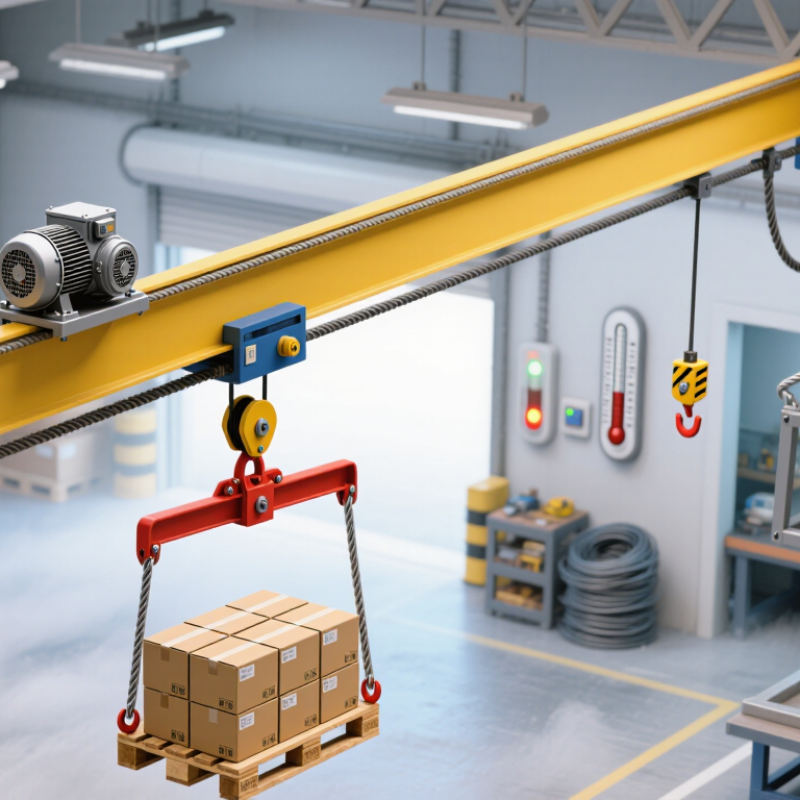
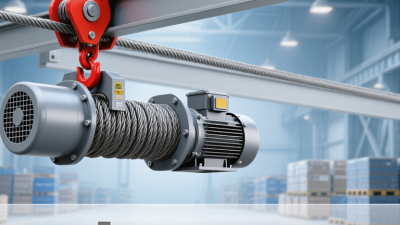
An electric wire rope hoist converts electrical energy into controlled vertical lifting. Its motor turns a gearbox, which rotates a grooved drum. The drum winds steel wire rope through a pulley block, raising or lowering the load. An electromagnetic brake holds the load when power stops. Limit switches prevent overtravel, while overload protection reduces unsafe lifting. The system looks simple. It is not.
Selection starts with the working load limit, lifting height, lifting speed, and duty cycle. A 2-ton hoist may fail prematurely when used continuously near its rated capacity. Wire-rope reeving also matters. More falls of rope can improve mechanical advantage, but they usually reduce lifting speed.
The frame must support the hoist, trolley, impact forces, and side loading. Side pulling is a frequent mistake. It can damage the drum, rope, and supporting structure.
Professional maintenance should follow recognized standards and documented inspections. OSHA 1910.179 specifies frequent inspections from daily to monthly, while periodic inspections may occur at intervals of one to twelve months, depending on service conditions. ISO 4301-1 also classifies crane machinery by duty group, helping buyers match equipment to real operating cycles.
Check rope wear, broken wires, brake response, hook deformation, and unusual gearbox noise. A low purchase price can hide higher downtime. I would still question any specification sheet that omits duty classification, inspection access, or emergency stopping details.
Choosing a 2026 electric wire rope hoist starts with real operating data. Start with the load. Rated capacity should exceed the heaviest routine lift, not only the occasional peak. Record load weights, lifting frequency, lift height, and daily operating hours. ISO 4301-1 classifies crane duty through total work cycles and load spectrum. Capacity alone is incomplete.
Duty class affects motor heating, brake wear, and service life. A hoist lifting five tonnes twice weekly needs a different specification from one lifting two tonnes every ten minutes. Check the manufacturer’s FEM or ISO classification against your actual cycles. ASME B30.16-2022 also emphasizes rated-load marking, inspection, and safe operating controls. Ask for documented test results, not confident language. That matters.
Voltage, lifting speed, headroom, rope diameter, reeving, and ambient temperature deserve equal attention. A compact body may reduce headroom, but it can limit cooling or maintenance access. Variable speed helps position a load near a fragile machine. It does not replace a properly sized brake. In dusty, humid, or outdoor areas, confirm enclosure protection and corrosion resistance. I would also verify emergency-stop behavior and overload protection during commissioning. Specifications can look impressive on paper. Field measurements often disagree. That is where a careful buyer should pause.
Practical specification comparison for selecting an electric wire rope hoist
| Specification | Typical Industrial Range | Why It Matters | Recommended Selection Approach | Key Verification Point |
|---|---|---|---|---|
| Rated lifting capacity | Approximately 0.5–100 tonnes, depending on the hoist design and application | Determines the maximum permitted working load, including the load-handling attachment | Choose a rated capacity above the heaviest anticipated lifted load without routinely exceeding the working limit | Confirm whether the stated capacity includes the hook block, lifting beam, grabs, or other below-the-hook equipment |
| Maximum lifting height | Commonly 3–30 m; longer lifts may require a customized rope drum or reeving arrangement | Controls whether the hook can reach the required working and storage positions | Specify the vertical travel from the lowest required hook position to the highest required hook position | Check available headroom, drum rope capacity, and the remaining safety wraps on the drum |
| Lifting speed | Approximately 0.8–12 m/min; dual-speed or variable-speed versions are widely used | Affects cycle time, load-control accuracy, and positioning safety | Use a higher speed for repetitive production lifting and a slower speed for precise positioning | Review speed at the actual rated load, not only the no-load or light-load speed |
| Trolley travel speed | Approximately 5–30 m/min, with slower speeds used for accurate load placement | Determines how quickly the load can move horizontally along a compatible runway or bridge | Match the speed to runway length, load-control requirements, and operator visibility | Verify flange width, rail profile, wheel load, end-stop clearance, and minimum curve radius where applicable |
| Duty classification | Common classifications include ISO M3–M8 or FEM 1Bm–5m, depending on the standard used | Reflects expected load spectrum, operating time, starts per hour, and design service life | Select the class from actual daily cycles and average load, not only the maximum load | Request the manufacturer’s duty calculation and clarify the relationship between ISO, FEM, and local standards |
| Operating time and work cycles | Light-duty units may handle occasional use; heavy-duty units are designed for frequent cycles and longer daily operation | Prevents overheating, premature wear, and an unsuitable service-life expectation | Record lifts per hour, average lifting time per cycle, average load, and peak load frequency | Check motor starts per hour, equivalent operating time, thermal rating, and brake duty |
| Power supply | Common industrial supplies include 380–415 V, 3-phase, 50 Hz and 440–480 V, 3-phase, 60 Hz | Incorrect voltage, phase, or frequency can cause unsafe operation or motor damage | Specify the actual site supply before selecting the motor, controls, and protection devices | Confirm voltage tolerance, frequency, phase sequence, control voltage, grounding, and short-circuit protection |
| Motor protection and insulation | Industrial motors commonly use IP55 or higher protection; insulation class F is widely used | Provides resistance to dust, moisture, heat, and demanding starting conditions | Use higher protection for dusty, wet, outdoor, washdown, or corrosive environments | Verify the complete hoist enclosure rating rather than relying only on the motor rating |
| Wire rope diameter and construction | Often approximately 6–22 mm, depending on capacity, reeving, drum size, and design factor | Influences lifting strength, fatigue resistance, drum size, bending performance, and maintenance cost | Select the rope as a complete system with the sheaves, drum, reeving, and rated load | Confirm rope grade, lay direction, minimum breaking force, discard criteria, and lubrication requirements |
| Reeving arrangement | Single-fall and multi-fall arrangements are common; multi-fall reeving increases capacity and reduces rope speed | Affects rated capacity, lifting speed, hook approach, rope tension, and maintenance access | Use the simplest arrangement that satisfies capacity, height, and hook-position requirements | Check the number of rope parts, equalizer arrangement, hook block capacity, and reeving diagram |
| Brake system | Fail-safe electromagnetic or electro-hydraulic brakes are commonly used on lifting mechanisms | Holds the load when power is removed and supports controlled stopping | Choose a brake designed for the hoist’s rated load, duty class, and stopping frequency | Verify brake torque, manual release provisions, wear adjustment, and inspection intervals |
| Control method | Pendant control, radio control, contactor control, and variable-frequency drive control are commonly available | Determines positioning accuracy, operator mobility, acceleration, deceleration, and diagnostics | Use pendant control for simple fixed workstations and variable-speed or radio control for complex handling areas | Check emergency stop, control range, fail-safe behavior, overload protection, and control compatibility |
| Overload protection | Electronic load monitoring, torque limiting, or electromechanical overload devices may be used | Helps prevent lifting beyond the rated capacity and reduces damage from overload events | Treat overload protection as a safety layer, not as permission to lift above the rated capacity | Confirm the trip setting, reset method, calibration procedure, and whether overload data can be recorded |
| Limit switches | Upper and lower lifting limits are standard; travel limits may also be fitted to motorized trolleys | Reduces the risk of over-hoisting, slack rope, collision, and mechanical overtravel | Specify operating limits that leave a safe clearance from structural and process equipment | Verify independent emergency stopping, limit-switch adjustment, and test procedures |
| Ambient operating conditions | Many standard units are designed around approximately −20°C to +40°C; special conditions require review | Temperature, humidity, dust, chemicals, altitude, and outdoor exposure affect reliability and safety | Specify the full environmental profile, including minimum temperature, humidity, dust, and corrosive exposure | Check derating requirements, enclosure rating, corrosion protection, heater options, and hazardous-area certification if needed |
| Headroom and overall dimensions | Compact headroom designs are available, but dimensions vary significantly by capacity and reeving | Determines whether the hook can reach the required height and whether the unit fits the building envelope | Compare the minimum hook approach, hoist height, trolley height, runway elevation, and service clearances | Request a dimensional drawing showing hook approach, wheel loads, service access, and maintenance clearances |
| Noise level | Typical mechanical hoist noise may be approximately 70–85 dB(A), depending on load, speed, and installation | Affects operator comfort, workplace communication, and noise-control compliance | Request measured sound data for the complete operating condition rather than the motor alone | Confirm measurement distance, load condition, lifting speed, and whether trolley noise is included |
| Inspection and maintenance access | Routine checks commonly include rope, hook, brake, limit switch, electrical controls, gearbox, and fasteners | Accessible components reduce downtime and help maintain safe operating condition | Prioritize designs with accessible inspection points, replaceable wear parts, and clear service documentation | Obtain inspection intervals, spare-parts lists, lubrication specifications, rope-discard criteria, and testing requirements |
| Compliance and documentation | Documentation may reference applicable crane, machinery, electrical, lifting-equipment, and workplace-safety standards | Demonstrates that the equipment has been designed, tested, installed, and operated under recognized requirements | Match the hoist documentation to the regulations and inspection rules of the installation location | Require manuals, load charts, certificates, test records, wiring diagrams, risk information, and maintenance instructions |

Choosing an electric wire rope hoist starts with the real load, not the advertised maximum. Add the product, hook block, slings, lifting beam, and other below-hook equipment. A 3,000-kilogram load may require more than a 3,000-kilogram hoist rating. Check the required safety margin against applicable standards and the manufacturer’s technical data. Oversizing can waste money, while undersizing creates serious operating risks. A quick capacity rule can mislead.
Measure twice. Do not guess. Lift height means the complete hook travel, from the lowest working position to the highest safe position. Record beam height, headroom, floor clearance, and the space needed for loading. A hoist with enough capacity may still fail your installation if its hook cannot reach the work area. Include upper and lower limit settings during planning. These details often appear small on a drawing, then become expensive onsite changes.
Work duty describes how often and how hard the hoist operates. Review lifts per hour, daily operating hours, average load percentage, starts, stops, and load distribution. A workshop lifting light parts occasionally needs a different duty rating from a production line running continuously. A higher duty class usually improves service life, but it does not repair poor maintenance or misaligned reeving. I would rather question an optimistic cycle estimate than approve a convenient one. Check brake wear, rope condition, controls, and inspection records before final selection.
In practical hoist purchasing, safety starts with the rated load, lifting height, duty cycle, and working environment.
Do not judge a wire rope hoist by motor power alone. Check the working load limit, rope diameter, reeving method, and lifting speed against your daily lifting plan.
The load plate should be clear, durable, and permanently attached. Missing markings are a warning sign.
Buyers should verify compliance with applicable local rules and recognized standards, such as ASME B30.16 or EN 14492-2, where relevant. Ask for test certificates, inspection records, and traceable serial numbers. A certificate without equipment identification proves little.
Check the overload limiter, upper and lower limit switches, fail-safe brake, emergency stop, and properly grounded electrical enclosure.
For dusty or damp areas, confirm the enclosure protection rating and cable suitability.
During a factory inspection, listen for uneven brake release, rope scraping, or abnormal vibration. These details often reveal problems before paperwork does. Confirm that the pendant control returns safely when released, and that controls are clearly labeled.
A pre-delivery load test is valuable, but it does not replace scheduled inspections. Even experienced buyers can overlook rope fleet angles or poor anchoring.
That mistake deserves reflection. Select suppliers who provide maintenance instructions, spare-part information, operator training, and responsive technical support.
Safety depends on the complete lifting system, not only the hoist itself.
Choosing the best electric wire rope hoist in 2026 requires more than comparing lifting capacity and purchase price. Installation can expose hidden costs. Check runway alignment, available headroom, power supply, control voltage, and beam strength before ordering. A hoist that fits the load may not fit the building. Leave service access around the drum and motor. Ask for installation drawings, wiring diagrams, and commissioning procedures. On one project, we underestimated clearance above the hook. The correction delayed production.
Maintenance should be judged before the hoist arrives. Inspect the wire rope, drum grooves, brakes, limit switches, and pendant controls at planned intervals. Confirm how easily technicians can reach these parts. Review lubrication points and expected inspection records. A low-cost hoist becomes expensive when replacement parts are slow or specialized. Include rope replacement, brake adjustment, energy use, and downtime in the ownership calculation. Purchase price is only one line.
Supplier support can separate a dependable hoist from a troublesome one. Request training for operators and maintenance staff, not just a manual. Confirm spare-part availability, remote troubleshooting, commissioning assistance, and realistic response times. Ask for references from facilities with similar duty cycles. I prefer clear service terms over impressive promises. Still, supplier claims need verification. A written support plan, with named contacts and delivery expectations, is more useful than vague reassurance.